Wednesday, September 9, 2009

Profiling Booklet 3G, Nokia's foray into Netbooks

Another dumb dead piece of meat from Nokia stable?

The Finns are turning up the heat and in style! Two back to back announcements on the mobile computing front seems to have turned the spotlight on Nokia World event on September 2nd at Stuttgart, where it will unveil atleast one of the two new flagship devices on which the fortunes of the beleagured Mobile giant would seem to rest. Lately Samsung, Apple and RIM have taken a lot of sheen away from Nokia lately.
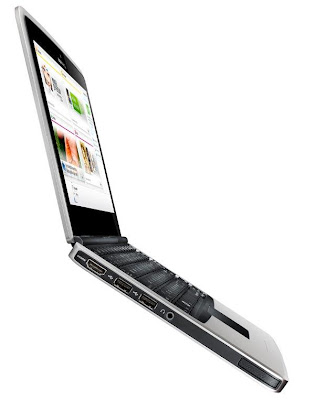
The first would be Nokia’s first foray into the wworld of netbooks, with its Booklet 3G. Nokia Booklet 3G is based on Intel Atom processor, features 10.1” screen, weighs 1.25 kilograms, measures “slightly more than two centimeters” and supports 3G/HSPA and Wi-Fi connectivity as well as A-GPS support. The netbook also sports Nokia’s broad suite of Ovi services. Besides, the mini-laptop comes with an HDMI port for HD video out, a front facing camera for video calling, integrated Bluetooth and an SD card reader. It is rumoured that Booklet 3G runs Microsoft Windows 7 Home Premium, an operating system that lacks certain security and other features that enterprise users may require. Moreover, the system features 10.1” screen, low-performance Atom processor, lacks DVD playback, but weighs 1.25kg, just like a fully-fledged business-oriented ultra low-voltage notebook. Overall, those peculiarities do not make Nokia Booklet 3G as a good mobile PC for travelling.It does pack a 12 hour Hercules battery which is so in line with Nokia’s DNA! The 12 hour battery is a dream and a differentiator in a world of netbook wannabees!

The world of netbooks is becoming increasingly crowded and the party will hit the deck with the iTablet that is scheduled sometime early next year. So long, it is a rat race and Nokia joins the hoard. While there are many views on which way the device evolution is leading upto, my take is that netbooks are just another step in device evolution and this evolution would finally end somewhere in the smartphone space or thereabouts. In that respect, Nokia could have done better getting its smartphone portfolio and user interface in order, rather than descend into the crowded spaces of Netbooks. We will watch how the Booklet with the Nokia tab does for Nokia. If the prices are as indicated, around the $799 range, then this like the N 97 could end up becoming the non starter. Granted that the device looks neat and dapper, but it is only incremental in what it brings to the table not radical enough.
Overall, it remains to be seen, whether Booklet 3G becomes popular. But at this point it does not seem to be a successful return of Nokia to the world of x86-based personal computers. Instead, Booklet 3G looks like a test vehicle to investigate the needs of Nokia’s clients.

Watch the Nokia Booklet 3G on the following YouTube Videos:

Thursday, September 3, 2009

The cost of cloud computing

Featuring an analysis of the top 3 cloud computing companies by Dion Hinchcliffe in terms of current pricing and feature sets.This is probably one of the first time a cost, feature benefit of cloud computing is being examined and from the looks of it this space is gong to get red hot in future.

Lessons from today’s cloud computing value propositions

Taking a look at all this, I’ve come away with five conclusions about the top providers of cloud computing today given their current pricing and feature sets:
  1. Amazon is currently the lowest cost cloud computing option overall. At least for production applications that need more than 6.5 hours of CPU/day, otherwise GAE (Google Apps Engine) is technically cheaper because it’s free until this usage level. Amazon’s current pricing advantage is entirely due to its reserved instances model. It’s also the provider with the most experience right now and this makes it the one to beat with low prices + maturity. However, expect subscriptions from Azure to give it a run for its money when Microsoft’s cloud platform formally launches in a few months (probably November).
  2. Windows costs at least 20% more to run in the cloud. Both Microsoft and Amazon offer almost identical pricing for Windows instances while Google App Engine is not even a player in Windows compute clouds. There are undoubtedly cheaper offerings from smaller clouds but they are less likely to be suitable for enterprise use, though certainly there are exceptions.
  3. Subscriptions will be one of the lock-in models for cloud computing. Pre-pay for your cloud to get the most value and you’ll get great prices. But you’ll be committed to providers for years potentially without a way to leave without stranded investments.
  4. Better elasticity does not confer major price advantages. GAE is one of the most granular of the cloud computing services, only requiring for you to pay for what you actually use (for example, you have to commit to at least an hour of compute time at a time from Amazon) but does not provide a major cost advantage for large applications.
  5. You can’t pay more for better uptime and existing SLAs are not sufficient for important business systems. It’s unclear why, given open questions about cloud reliability, why no vendors will offer differentiated service where enterprises can pay more for a better SLA. The best you can get right now is also the worst, or 99.95% uptime. This is about 4 hours of expected but unscheduled downtime a year. For business critical applications, this is still too much. This will end up being an opportunity for other vendors entering the space though I expect the Big 3 listed here will improve their SLAs over time as they mature.

Wednesday, September 2, 2009

Wikipedia goes with "Flagged revisions": Emphasizes importance of discipline in Crowd Sourcing

Crowd-sourcing to create an online repository of data/information has been a masterstroke from Jimmy Wales, the founder of Wikipedia! However, monitoring content in flow and validating data to be “clean” is key to building credibility. A little bit of censorship/discipline of data may actually favor Crowd-sourcing and content democratization!

Wikipedia, the online encyclopedia launched by American entrepreneur Jimmy Wales in 2001 with the idealistic intention of being an online repository of all human knowledge, announced this week that it would have to abandon one of its founding principles. To combat a growing amount of vandalism on the website, all entries would be edited before they go up on the site. Wiki announced this on August 31st and will conduct a pilot run over the next fortnight to assess the data validity, cleanliness on these lines.

Previously, any user was allowed to make – almost – any change to any entry: this was hailed as part of the democratizing power of the internet. But a sharp increase in false information – particularly in relation to people still alive – has forced a rethink.


How did the Wikipedia work before?


Wales has been feted as a brilliant business mind and social innovator for tapping into a popular impulse to add to public knowledge that few people knew existed, and even fewer publicly predicted.

Wikipedia still works largely by allowing anybody to login as a user and click on an “Edit this page” tab at the top of an entry. From there it’s simply a case of making changes and saving them, albeit according to a policy on “biographies of living persons”.

Any changes are then filed under the “Edit history” of the page, and the IP address – a numbered identity that shows where the change has been made from – is also kept on record. Pages that contain unverified information are highlighted.

Wiki introduces “Flagged Revisions”

The new policy is referred to as “flagged revisions”. It allows editors to adjudicate (mainly through reference to other news sources) on changes made to the pages of a living person. The flagged revisions will be rolled out by September15th,2009, and Wikimedia, the non-profit organisation that runs the website, will monitor users responses over the trial period.


A team of “experienced volunteer editors” will oversee amendments to such pages. “We are no longer at the point where it is acceptable to throw things at the wall and see what sticks”, said Michael Snow, chairman of the Wikimedia board.

And Mike Peel, its UK spokesman, clarified the intention: “Anyone can continue to edit these articles, but the work of inexperienced editors with less than three days’ experience will be subject to review by more experienced editors”, he said. “This is our attempt to create a buffer to ensure that editors do not commit acts of vandalism.”

Microsoft and Apple ready for war in portable media players

The war of portable media players has just gotten hotter!


On 24th August 2009, Microsoft anounced the touch screen version of the Zune portable media player which was announced on 26th May, this year was ready for launch and has been christened Zune HD.According to a report on Cnet, Microsoft will launch Zune HD’s sales campaign on 15th September at a price point of USD219 for 16GB and USD289 for 32G in 2 color options of black and platinum. Amongst others, Zune HD will offer several features that are not found on the iPod Touch, including an OLED display, HD radio, and high-definition video playback (using an optional dock accessory). Other new fetures will also feature Internet Explorer Web browser to work hand in hand with other Wi-Fi features (song sharing, Channel streaming, and Zune Marketplace browsing).Zune HD’s browser is optimized for the touch screen with an onscreen keyboard, but there’s no word on whether it will be capable of streaming Flash media (used by sites such as YouTube and Pandora), a capability that is currently lacking in the Safari browser for the iPhone and iPod Touch.Another interesting feature of the Zune HD will be it’s ability to integrate an HD radio tuner which can also transmit artist and song data, very useful for it’s existing FM radio song-tagging and download feature.Other regular features like a photo viewer, games, podcast management, and Zune Pass music subscription integration. Another significant improvement compared to Zune’s previous models will be it’s battery life. Microsoft said that it can have 33 hours of music playback and 8.5 hours of video (with Wi-Fi deactivated). High battery life will be significant since Zune’s previous models are none other than their poor battery performance.Microsoft also plans to dramatically beef up the video download selection of its Zune Marketplace online store, and use the improved storefront to power the movie and TV downloads available to the Xbox gaming console. The new storefront will support movie rentals that can be transferred to Zune hardware (similar to iTunes movie rentals) playable from either your computer or from the Zune HD.


If Microsoft was trying to steal the thunder out of Apple’s media event on 9th September, it almost succeeded. Almost! Apple’s reply came barely 48hrs after Microsoft’s declaration. Zune HD would be met with a fight and Apple would launch the newest versions of iPod Nano and iPod Touch to counter Zune HD! The big story would be the addition of Cameras to both the iPods! Also featuring would be the introduction of iTunes 9 with elements of social networking built into them. Rumours have it that Apple’s iTunes could carry support for Blu-ray discs, visual management and rearrangement capabilities for App Store software.
http://www.gizhq.com/2009/08/24/microsoft-and-apple%E2%80%99s-market-warfare-goes-hardware-with-zune-hd-portable-media-player/
http://www.boygeniusreport.com/2009/08/08/apple-itunes-9-details-blu-ray-app-organization/

Tuesday, September 1, 2009

Google innovates on maps to show highway and arterial traffic

Google Maps Will Now Show You Traffic Conditions on Back Roads
Google Maps added another nifty feature that will show live traffic conditions on arterial roads (non-highway roads) in selected cities. Google Maps will also show traffic patterns on main highways as well, helping see the least-trafficked route is for commute between two points.

To enable this feature, the user needs to zoom-in on the city and click the “Traffic” button in the upper-right corner of the map. This will give the traffic conditions of both arterial roads and highways. The colors correspond to the speed of traffic green is little to no traffic, yellow is medium congestion, red is heavy congestion, and red/black is stop-and-go traffic.
Google says that this feature can also be accessed on Google Maps for Mobile, which is particularly useful when trying to figure out the best route on the go. Google also shed a little bit of light as to how they crowdsource traffic info via Google Maps on mobile phones. On enabling Google Maps with My Location, the phone sends anonymous bits of data back to Google describing how fast the user is moving. When Google combines travelling speed with the speed of other phones on the road, across thousands of phones moving around a city at any given time, they can get an idea of traffic live conditions. They continuously combine this data and send it back to you for free in the Google Maps traffic layers.
Google assures users that they only use anonymous speed and location information to calculate traffic conditions, and only do so when the user has opted to enable location services on his or her phone.

Tuesday, August 25, 2009

Profiling Windows Mobile ( Part I): Does Dual platform make sense?

Windows Mobile is old. The basic UI and underlying technology is the same today as it has been for years. Windows Mobile is not exactly the best mobile solution around. Neither is it “exactly profitable” according to Steve Ballmer! All too often Microsoft has been accused of not having a coherent Mobile strategy. Android which is about a year old now is far more “happening” and “exciting” according to smart-phone users and smart-phone makers. The case in point here is HTC conversion from WinMo to Android. Now, there has been a lot of noise around Windows Mobile 7.0, the purported OS that will resurrect Microsoft’s flailing fortunes with its Apple iPhone like interface, browsing and experience. This one will be Microsoft’s answer to Apple.Microsoft will take Winmo 7.0 to market by Q3/4 2010. That’s a bloody hell of a wait.


Windows Mobile may not be irrelevant, however, it needs a technology facelift — and it needs it now, not a year from now. That is where, Winmo 6.5 intends to step up as a placeholder. Microsoft is expected to officially launch Windows Mobile 6.5 on October 1, 2009 and add an upgrade version with a touch interface in February 2010, the sources indicated citing Microsoft roadmap.Microsoft will not phase out Windows Mobile 6.5 from the market but will lower the OS price, when it launches Windows Mobile 7 scheduled in the fourth quarter of 2010.

This also means that for sometime after the launch of Winmo 7 both the platforms will be around together. Microsoft will be using a “dual-platform” strategy to compete with Android and the iPhone. Winmo 6.5, due to be rolled out October 1, will compete with Android, while WinMo 7 will compete with the iPhone. One cannot also deny the fact that Winmo 6.5 will not compete against Winmo 7.0 and it will take some degree of product planning with the Microsoft product teams to minimize collateral damage between 6.5 and 7.0. For the Microsoft team, 6.5 followed by 7.0 also gives them the following advantages:
  • Windows Mobile is entrenched in its current form and that inertia is going to be difficult to overcome.
  • At the same time, there’s pressure to compete at a lower level with a lighter and savvier OS — something 6.5 really isn’t able to pull off
However from the consumer perspective, 2 legacy systems is a bad idea-as Microsoft has proven over and over in various arenas. The other option may be to take 6.5 off the table, focus on 7, provide updates on the current 6.1 version but make sure enough soft back-compatibility to let businesses make the changeover once Winmo 7 is unveiled.

Ref:
http://jkontherun.com/2009/08/20/can-microsoft-turn-the-big-windows-mobile-ship-around-in-time/
http://www.mobilecrunch.com/2009/08/19/microsoft-to-pit-windows-mobile-65-and-7-against-one-another/
http://www.digitimes.com/news/a20090819PD210.html

Nokia, Apple head to head on Internet Tablets

Nokia is to have another go at convincing customers they need a tablet PC in their house according to spy shots that have turned up on the internet. Called the Nokia RX-51, the handset, which looks like an XL version of the N97 just released are from an Indonesian website claiming to have got their mitts on a prototype. According to the websitewhere the details were first posted the new model will have a screen resolution of 800 by 480 pixels, 5 megapixel camera with Carl Ziess lens on the back, slide out qwerty keyboard and Wi-Fi. It will run on an OMAP3 ARM Texas Instruments chipset. A SIM card slot also looks to be present.

Not surprisingly considering the history of the company’s N800 and N710 models it will run the Linux Operating System based on Maema 5. Nokia is expected to launch a range of new devices at Nokia World in September. Nokia’s 2009 roadmap shows some interesting devices rather than just more handsets. Could this be launching next month? If that had to happen, Nokia could have a faster “to the market” time compared to Apple which is also expected to showcase the iTablet sooner!

While the RX 51 is only a dirty shot of the final piece, the product architecture is sadly reminiscent of the N 97 form factor, while if the Apple iTablet Pic leaks are to be believed, the form factor is a refreshing change. Add to the mastery over the UI that Apple has and it looks like this showdown is already heavily swaying towards Apple’s prodigy. I would have assumed that Nokia would like to recreate the earlier WiMAX tablet designs which it had shelved an year back. But that doesnot look like to be the case. By designing the Tablet so close to N 97, Nokia is actually stealing all the technology glam and flaunt quotient that Apple seems to be positioning itself on.


Earlier, market researcher Richard Doherty, claimed that Apple has developed two protoype tablet computers: one essentially an oversized iPod touch carrying a 6-inch screen and a second one with a larger screen. Apple has developed prototypes of two different tablet machines — one that resembles a large-sized iPod and boasts a 6-inch screen, and another that features a larger display. The larger prototype is able to run all Mac applications, and allows for video and audio editing and graphic animation, Doherty says. The 6″ one , which looks like a larger iPod, lends itself to watching videos, playing games, and reading e-books. Earlier,Apple had been rumored to have investigated screens for its tablet prototypes ranging from 4 inches to 12 inches, although most rumors have pointed to a screen of approximately 10 inches for Apple’s planned launch product.