Showing posts with label iMac. Show all posts

Thursday, July 30, 2009

Apple: What Next?

Apple’s Q3 results have been very good! The thought is that this is Apple’s brightest hour and having hit the peak, there is no way but a gradual slide down. However there is more in the communication from Apple on how they let their own products cannibalize themselves and how they are innovating the future! Apple COO stops short of naming iTablet as the next from Apple Stable

Ref: http://online.wsj.com/article/SB124820913514969595.html; http://online.wsj.com/article/SB124821056118269783.html; http://blogs.wsj.com/digits/2009/07/21/live-blogging-apple-earnings-2/

Apple has been heaped with praises for its non-conformist strategy and super-hit portfolio of products which have upstaged the industry incumbents. The Q3 results declared this week have been Apple’s moment in history! Third-quarter sales rose to $8.34 billion, up from $7.46 billion a year ago, due in part to strong sales of the iPhone. Net income rose to $1.23 billion, up from $1.07 billion. Apple’s growth of 4% with IDC forecasting negative 3 percent and Gartner forecasting a negative 5 percent, puts them 7-9 points ahead of the market.
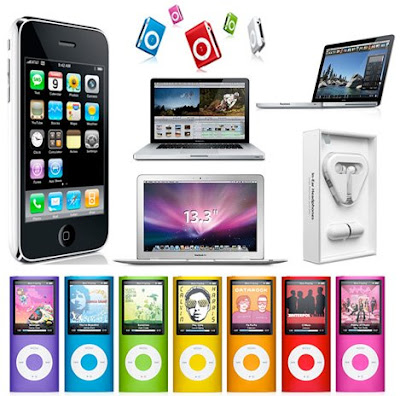


  1. Response to the new iPhone 3GS has been tremendous with over 1 million sold by the third day after its June 19th launch. Apple goes on record saying that they are currently unable to make enough iPhone 3GSs to meet demand and are working to address that.

  2. Apple registered outstanding sales of 2.6 million Macs setting a new June quarter record and nearly meeting the all time quarterly record.

  3. Apple sold 10.2 million iPods which was down from 11 million in the year ago quarter. There were two key reasons for this decline: First, we reduced channel inventory by over 400,000. Second, sales declined by 4% year-over-year.

  4. The iTunes store delivered another great quarter fueled by strong sales of music, video and apps.

  5. Apple retail stores hosted 38.6 million visitors during the quarter compared to 31.7 million visitors in the year-ago quarter –an increase of 22%.

  6. Apple’s app store has more than 65,000 apps, compared with 1,000 to 2,000 at the Nokia store. Apple thus has a substantial lead on apps.

There were a few significant announcements during the earnings call, which warrant attention.

The first point
The iPod growth story now appears to be tapping off. Shipments of iPods fell 7% from the first quarter to second. And iPod ASPs also declined, despite the growth of the more expensive iPod Touch.

Revenues from selling Mac computers actually fell 8% last quarter compared to a year ago. The company sold 4% more Macs than it did in the same period last year, at a lower price point.
Macs and iPods are slowing down and may be entering the declining plateau stage of their life cycles! Apple would have seen this coming, and the $99 iPhone would be cannibalizing the iPods, by design.

Secondly, if you read between the lines of Timothy Cook’s message, it appears that Apple has a trick up its sleeve. Quoting Apple COO, Timothy Cook

“I think some of the netbooks that are being delivered, or many of them, are very slow. They have software technology that is old. They don’t have a robust computing experience. They lack horse power. They have small displays and cramped key boards.”
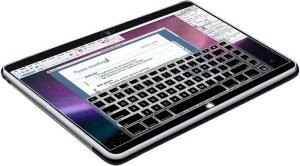
Is this what Apple is going to spring upon Netbook manufacturers?

The invective makes you think that while Apple rails against the existing Netbook makers, may be, it has a net-book product that it plans to launch soon! Is this the Apple heralding its iTablet.

Wednesday, May 6, 2009

Will Apple slip back now?

reproduced from http://www.guardian.co.uk/business/2009/may/03/apple-iphone-technology-market

"Every once in a while a revolutionary product comes along that changes everything. Today Apple is going to reinvent the phone."... That was Steve Jobs at the launch of iPhone in 2007.

The ever-expanding array of touchscreen handsets is just the physical evidence of the monumental change the iPhone has wrought. It has sent some of the largest technology companies in the world back to the drawing board and proved that, given the opportunity, people will do far more with a phone than make calls and send texts. For Apple, the iPhone may also be one of the most important products it has produced since its first personal computers in the late 1970s.

Before the iPhone there were already touchscreen devices; there were mobile phones that could play music and videos; there were mobile phones that could access the internet and send emails; and it was already possible to download applications on to some devices in order to personalise them. But hardly anyone took advantage of these features. Finding them was hard enough; getting them to work was a nightmare and most consumers gave up.

"It is not as though Apple invented a totally new technology," says Adam Leach, principal analyst at consultancy Ovum. "What they did was re-think the whole mobile experience and produce a very polished experience compared with what people were used to."

The iPhone was also aimed at a segment of the market that the giants of the handset industry had been ignoring - the "high end". Nokia, Motorola and Sony Ericsson were chasing the middle of the market where the high volumes and high subsidies from the mobile phone operators were. Their launch strategies involved upgrading their phones bit by bit - a better camera, a brighter screen or larger memory - so as to make the "new" device just a little more attractive. Making a phone a different colour boosted sales, but did nothing to persuade anyone to do more than make calls, send texts or download the occasional ringtone.

The iPhone, in stark contrast, is sexy and very, very easy to use. Since its arrival there has been a stampede back into making top-tier phones, not least because the recession has decimated the mid-market. Cash-strapped consumers are demanding a much better phone in return for signing an expensive monthly contract; if they don't get one, they are opting for cheaper Sim-only deals and holding on to their old handset.

BlackBerry rushed out its first touchscreen device - the BlackBerry Storm - to be followed by the first from Nokia, the 5800; Samsung and LG have been churning out touchscreen devices from the Tocco and the Omnia to the Renoir and the Arena. Waiting in the wings are new touchscreen devices from Palm (the Pre) and Sony Ericsson (the Idou).

The iPhone's ease of use, meanwhile, has turned the spotlight back on an often neglected aspect of mobile phones: the software. A month after the iPhone appeared in the UK, Google brought together some of the biggest names in mobile to develop a new operating system. Called Android, it has already appeared on two touchscreen devices, made by HTC, and many more are planned. A year after the iPhone appeared, Nokia bought out its partners in Symbian, which produces operating systems for smartphones. Then Microsoft rewrote Windows Mobile and its new guise - unimaginatively called Windows Mobile 6.5 - has borrowed a lot from the iPhone's look and feel.

Already more than 1bn iPhone applications have been downloaded from the iTunes store. The Android marketplace is operating, while RIM - maker of the BlackBerry - is also pushing applications at its users. Nokia's Ovi Market and Microsoft's Windows Marketplace are both set to go live this month.

In the 12 months before the handset launched, Apple raked in $22bn in revenues. That has rocketed to almost $34bn in the past year, largely boosted by the iPhone and iPod Touch. The success of the iPod made Apple's Cupertino headquarters one of the coolest places to work in Silicon Valley and the iPhone has made it one of the most powerful.

With so much now at stake, some experts suggest the iPhone will soon become the most important technology Apple's empire has produced, even, potentially, eclipsing the computer business that revolutionised our lives in the 1980s. There are an estimated 1bn personal computers in use worldwide, but that many mobile phones are sold every year and for many people their first experience of computing will be through a mobile phone.

But while Apple caused a revolution, it is unlikely to become dominant in the market. It has sold just over 20m iPhones since the first device appeared in 2007; in that time more than 1.5bn phones have been shipped by everyone else. Later this month, the first wave of British users are freed from the contracts they had to sign to grab one of the early iPhones and start contemplating a replacement, they will be faced with a range of remarkably similar devices.A similar thing happened with the personal computer market. The concept was championed by Apple when it launched Apple II, the world's first personal computer, in 1977, and the first Macintosh in 1984, but other players now lead the market.

While iPhone is the Touch Pioneer, it faces tough competition from other wannabe's in the market today. So far, the other part of the twin strategy, applications has been successful in creating a stickiness around this product. However, competitors are working hard at that as well. It will be interesting to see, whether Apple slides down despite retain its Technology leadership crown or do the folks at Apple have another ground breaking innovation around the corner.

Wednesday, March 4, 2009

The Ascendance of Apple


This has been Apple's decade. From behind and nowhere, this Cupertino, California based hi tech company has disruptive technologies and trends and worked its own path upwards. In the process, it has emerged as America's no.1 most admired company, sales have tripled over the last 5 years and it ranks no.1 amongst Fortune 500 companies for total return to share holders over the past 5 years (94%) and past 10 years (51%). The latest feather in Apple's cap is a successive listing (2008 and 2009) in America's most admired company list and World No 1 in most admired companies list. This 32 year old company had an unprecendented run since 1997 disrupting conventional wisdom on product lines and groundbreaking new products. Led fully from the front by Steve Jobs, Apple has out thought, out innovated and out played markets and competitors alike.

Timelines, Products and Discontinuities
As stated earlier Apple has launched waves of discontinuity in industries turning tables on the existing rules of the game:
1. Pixar, which Steve Jobs bought from George Lucas in 1986, out innovated the Hollywood mainstream into full length computer animated movie making with its Toy Story in 1995. It redid its success in 1998 Bug's Life, 2001 Monsters Inc, 2003 Finding Nemo, 2004 Incredibles. 2006 Cars. Pixar is sold to Disney in 2006 making Steve Jobs Billions.
2. In 1998, Apple upturned the desk top with its colourful IMac, which became the fastest selling Macintosh ever!
3. In 2001, which is arguably Apple's biggest year till date, it released the iPod, iTunes and OS X operating system. 8 years later, 50% of Apple's revenue come from iPods and iTunes store is the second largest music retailer in the US with 6 billion downloads. It spawns a plethora of attempts by Telecom industry players, notably Nokia and Microsoft to build a Music store, on a somewhat different business model.
4. iPod Nano is released in 2005 and is a huge hit. iPod becomes to music players what Kleenex is to tissue or Xerox is to copiers.
5. iPhone is introduced in 2007. Gets the status of Jesus phone and in one sweep upturns the existing game inthe mobile device industry. Spawns a record number of copy cats.
6. 2008: MacBook Air released, a ultra thin 13 inch wide sleek metal laptop. Apple again triumphs
7. 2008: A faster cheaper and more powerful iPhone 3G debuts and outsells the original by a mile.

Apple has demonstrated how to create real, breathtaking growth by dreaming up products so new and ingenious that they have upended one industry after another: consumer electronics, the record industry, the movie industry, video and music production.Apple's approach is to put every resource it has behind just a few products and make them exceedingly well. Apple is brutal about culling past hits: The company dropped its most popular iPod, the Mini, on the day it introduced the Nano (a better product, higher margins --> why dilute your resources?).
The culture of Innovation and the leadership of Steve Jobs has gotten Apple so far. As all and ever, everyone waits for Apple's next innovation, its next endeavour to change history.