Tuesday, July 14, 2009
How the cloud will transform mobile apps and why Big Apple may not be too happy about the developments?
Today the Apps store may not be generating a lot of cash/revenue. Infact, Apps Stores are thriving more on classic freetardonomics and base commoditization than ever. However, it is a space being infiltrated by handset-makers, software companies, and operations/ business support systems vendors, thousands of new and experienced developers, third parties and even carriers. It also is a space that will be and already is being transformed by the cloud, according to ABI Research.
In a report released this week, ABI said that new software running in the cloud will drastically change the way mobile apps are developed, acquired and used, breaking the market free from the constraints of limited computing power. According to the report, this new paradigm could deliver revenues of nearly $20 billion annually by the end of 2014.Web development can enable apps to run on servers instead of locally, so handset requirements for processing power and memory can be greatly reduced and developers will only need to create one version of their app. Certain apps and services, including Google Apps and Amazon.com, already use the cloud, but for the most part, while the industry is trending toward this, these are still the early days.
Many and most of these players, force developers to choose between picking their favorite OS or creating multiple versions of their app. Companies such as Qualcomm have launched open platforms for apps distribution to address this issue, but it still doesn’t solve the problem of taxing processing power and memory constraints. Though there are issues such as access, security, data back up, the main problem with a continuous connection with the cloud is that clouds based apps stop when the connection is lost. New programming languages such as HTML 5 can overcome this through data caching. So while cloud computing becomes more common, apps will become much more sophisticated. Business users will benefit from collaboration and data sharing apps; while personal users will gain from remote access apps, allowing them to monitor home security systems, PCs or DVRs, and from social networking mashups that let them share photos and video or incorporate their phone address books and calendars.
Interestingly, while Apple pioneered the Apps Store trend, it is also most likely to resist the cloud based model and be reluctant to move into a more democratic apps development market. It would be counterproductive for Apple to let the base for all the Apps driven advantage (iPod/iPhone based) to get diluted and hence, would not like to give up the control that Cloud Computing may ask to forsake on their Apps stores/developers. For the rest of the market, however especially wireless operators, for which the cloud can up transport revenues cloud computing should, and likely will, be embraced.
Office in the web: Here comes Microsoft Gazelle
Microsoft Office is “going” to the cloud. The new version of Office, syncs with the cloud, and has the ability to use the cloud without any software.
Earlier, Microsoft was rumored to have a top secret project which was code-named “Gazelle.” Microsoft would run the “new project” in browsers beyond just IE.
So yes, it looks like the Office Web that was first talked about at PDC last year.
And it’s possible that Microsoft could unveil that this new web-based Office will reside on the great domain, Office.com. That site is clearly going through a transition to new ownership right now, and that would make a lot of sense.
Office is obviously the 900-pound gorilla that Google is attempting to slay with Google Docs, but a 900-pound gorilla with a matching web offering will be a lot tougher. And that’s likely why Google wanted to get its own uppercut in first this week. And it’s a strong one. But now Microsoft is going to have to come up with some answers to how it can counter Chrome OS, rather than focus on talking about the new Office.
Saturday, July 11, 2009
OS Wars (Part IV): Sibling rivalry between Ubuntu and Chrome
The launch of the Google Chrome OS is seen primarily as a threat to Microsoft’s legacy. However, Chrome may also splinter the Linux juggernaut just when things were gung-ho with Ubuntu.
If there is one problem that the Linux and open-source community has suffered repeatedly over the past two decades, it’s been fragmentation. There are several different platforms: Solaris, AIX, HP-UX, FreeBSD etc and the list is always growing longer. Based on their regions and sources, users, communities and companies have switched among different Linux distributions several times over the past decade, as one or the other gained prominence.
After Red Hat, Fedora, Mandriva, Suse, Slackware and Debian, from the Linux stable; the bright light forming at the end of that confused and heterogeneous tunnel was Mark Shuttleworth’s Ubuntu. Out of the ferocious Linux distribution wars, Ubuntu has emerged with the seeming strength to take on the rest–at least when it comes to the Linux desktop platform. The growing dominance of Ubuntu (at least on the desktop, the server room seems to have been won by Red Hat) has delivered the Linux community a serious advantage in its ongoing war against the incumbent Windows and Apple platforms because of its ability to give software developers a single platform to concentrate on and polish to a degree not seen previously.
In this context, Google’s decision to create its own Linux distribution and splinter the Linux community decisively once again can only be seen as foolhardy and self-obsessive. Instead of treading its own path, Google should have sought to leverage the stellar work already carried out by Shuttleworth and his band of merry coders and tied its horse to the Ubuntu cart. If Google truly wanted to design a new “windowing system on top of a Linux kernel,” there should be nothing to stop the search giant from collaborating openly with the best in the business. Google’s plans to “completely redesign” the underlying security architecture of Linux could be seen as counterproductive to the purpose of Linux.
While Google has made moves in the direction of open source with its pledge to open-source Chrome OS, the same way it did with several previous projects: the Chrome browser itself and its Android mobile OS, doubts still remain about those projects also. For example, where do they fit in between true open-source projects, maintained and supported by the community, and to what extent are they extensions of Google’s online advertising empire?
Android is a great mobile operating system, second only to Apple’s iPhone platform. But Google still controls most aspects of Android’s development. Also, anyone using Android would have no doubt that the operating system ties in very nicely with Google’s cloud offerings (for example, Gmail). But things are a lot trickier if you prefer Windows Live or other rival systems. Chrome too, is a great browser that I use for much of my daily needs. But it’s mainly still in Google’s hands, and so those of us who prefer true competition to exist in the browser world take great comfort from the fact that Mozilla Firefox is completely independent and not pushing anyone’s agenda.
Who are you going to trust and believe in? The non-commercial Ubuntu Foundation (and wider project), which has developed an open-source operating system second to none and virtually ended the Linux distribution wars? Or Google, which also makes free products (well, mostly) and packages advertising in (sometimes)? Google makes great products. But it’s currently trying to tread a nice middle ground between completely embracing the open-source community and keeping control over software it has developed. That’s an impossible path to walk and one that leaves it open to being criticized for the same sort of arrogance that operating system vendors have been accused of for decades.
Reference: http://news.cnet.com/8301-1001_3-10281966-92.html?part=rss&subj=news&tag=2547-1_3-0-20
Friday, July 10, 2009
OS Wars (Part II): Measuring the Microsoft Response
Microsoft challenged Google’s raison d’etre Search engine, with its own “decision engine”, the game was “on”. Bing has done well compared to the earlier attempts of Microsoft on the search platform. Bing has caught Google’s attention and made some significant strides into the “Search” territory.
Then came the cracker from Google: The Chrome OS! When Microsoft struck Google deep inside (at its Search platform), Google retaliated at Microsoft’s core: The OS! Vintage warfare here!
However, an alternate thought to this subject is that the threat to Microsoft’s OS core was always there! It was only time before someone (and Google) decided to pick upon its open source and cloud computing basics to hit back at the “legacy systems” and proprietary Microsoft model. In short, Google is aiming to render desktop software irrelevant. To thwart them, Microsoft needs Windows to do things that a browser can’t–or do the same things significantly better.
Interestingly, if Microsoft wants some tips on how to do this, they might want to look toward Apple.
1.Essentially, this has been Apple’s challenge all along–Make the Mac experience enough better than a generic PC that it is worth the added cost. The Mac’s resurgence came when it had a strong OS–Mac OS X–combined with iLife applications that really nailed the experience for the tasks that people wanted to do on their computer at the time. Superior User Experience (in doing the same set of things) is an area is one where Windows has been languishing in recent years.
2.Although most people wouldn’t want to give up their favorite desktop applications (Windows or Mac), the Web has been gaining ground. Even areas that were once squarely in the desktop’s domain–such as photo editing, productivity software and personal finance are making their way onto the Web. What Windows really needs is a new generation of killer apps.
3.Microsoft also has to do something that Apple doesn’t–aim for the masses. Part of Apple’s success story has been about choosing its battles and accepting that it can’t win everywhere. The Windows model depends on ubiquity, so it needs answers with nearly universal appeal.
4.One area where Microsoft has been investing is around the area of doing the same things better. It’s focus on touch screens in Windows 7 is an example of this. Although multitouch is likely to remain niche in the short term, it shows the power that a desktop interface can have.
5.Microsoft also needs to minimize the downsides associated with Windows. On that score, Microsoft has made significant strides with Windows 7. The operating system boots quicker and behaves better than its predecessor.
6. On the Office side, Microsoft needs to create software that is enough better than Google that company’s want to pay for it. Next week, Microsoft is expected to talk more about Office 2010, the next version of Office, which is due out next year.
Microsoft is taking a two-pronged approach.
First, it is taking on Google Apps head-on with lightweight browser-based versions of Word, Excel, PowerPoint and OneNote that can run on Safari, Firefox and Internet Explorer. It will offer them to consumers via its Windows Live service–a service that today is free–and businesses will also be able to give the browser-based apps to their workers.
Second, Microsoft is also doing more on the desktop, adding in the kinds of features it hopes will make the Office suite worth paying for.
The path for Microsoft is clear. The big question, though, is whether Google will be able to be “good enough”
Microsoft has some time, but not a ton. Google’s operating system won’t even arrive on PCs until the second half of next year. Plus, for now, Windows has the advantage of legacy application support–i.e. businesses and consumers want to run their existing programs. But to stay in front for years to come, it will have to do better than that. It needs to figure out–and quick–what the next set of tasks users want to do with their computer and how to make them demonstrably better on a PC.
The company also has another/third option as well. It can work on Windows’ successor. It could be that it needs a lightweight browser-based OS of its own.
Indeed, the thinking beyond its Gazelle research project is that the browser needs to be more like an operating system. In that case, the browser doesn’t actually take on the operating system’s complete role, but rather relies on Windows. However, r has other operating system work under way as well, including its top-secret Midori project.
Microsoft may take all three approaches, but hold off on the third one unless and until it needs to. That’s pretty much what Microsoft has done with Office vis-a-vis Google Apps. It was only after large business customers started threatening to go to Google Apps that Microsoft conceded that it needed to offer full-on browser apps.
Ref: http://news.cnet.com/8301-13860_3-10282037-56.html?part=rss&subj=news&tag=2547-1_3-0-20
OS Wars (Part I): Google Chrome - The next gen OS (in the cloud)
Google Chrome OS is a computer operating system, based around the Google Chrome browser, which is aimed at speeding up process across more powerful computers. Google has stated that the software will be fast and lightweight with minimal bells and whistles “to stay out of your way”, much like its search engine and browser. It is being designed to help users get onto the web within a few seconds of logging on.Google is trying to alleviate some of the frustration inherent in Windows-based computers, such as slow loading times, computer viruses and complicated hardware installation. It hopes to achieve this by making the first operating system for the cloud generation – meaning the majority of the system’s work will be going through the web rather than on the computer.
Google has predicted people will be able to buy the first Google Chrome OS powered netbooks by the second half of 2010. However, because the system will be open sourced, like Chrome the browser, Google will be making the code available to developers later this year. A Google spokesperson said: “We have a lot of work to do, and we’re definitely going to need a lot of help from the open source community to accomplish this vision.”
As the system will be based on Linux and it’s open-source, it is largely expected Google Chrome OS will be free. Google will monetise the service as it gains share with corporate partnerships but to consumers, it should be totally free of charge. Google is in talks with all netbook manufacturers and therefore it is likely that most models, such as Samsung and Sony, will offer the software immediately post launch.
There are two major advantages vis a vis Microsoft’s Windows:
i) As the system is web-based it will offer users total integration with the internet and as more and more applications become web-based, the computer experience would be increasingly seamless.
ii) It is widely expected to be a free service, whereas Microsoft charges different amounts for its various versions of Windows.
Ref:http://www.telegraph.co.uk/scienceandtechnology/technology/google/5778031/Google-Chrome-OS-a-five-step-guide-to-the-new-operating-system.html
Wednesday, July 8, 2009
iPhone 3GS:Blockbuster yet again

From the first assessment, Apple’s iPhone is a runaway hit worldwide. earlier today based on a new set of numbers from Japan.
An analyst report from Piper Jaffray analyst Gene Munster’s, includes the incredible fact that 38 percent of 3GS customers were upgrading from the original iPhone, validating the idea that the only way for a customer to upgrade from an iPhone is to buy another iPhone.
The report of iPhone 3G S sales is based in part on observations of Apple and AT&T stores in New York and Minneapolis, estimates of the rates of sales, the hours of operation and the number of units supplied to each store, as well as surveys of 283 attendees.
A few pointers to the success of iPhone 3GS are as follows:
1.Roughly one million iPhones sold worldwide in three days, despite activation problems;
2.400,000 sold in the United States, 250,000 in the United Kingdom, an average of 18,000 in 19 other countries;
3.380,000 sold in the first two days (compared with 270,000 in a day and a half last year);
Sales were actually slowed by the approximately 15 minutes it took to activate each phone (sales at Apple stores last year took about 1 minute each);
4.Two-thirds of customers purchased the 16 GB iPhone (compared with last year, when 91 percent bought the top-of-the-line 8 GB model);
5.39% of customers were PC users (versus 25 percent last year);
6.38% of customers in the United States were new to AT&T, as opposed to 52% last year.
Why is Apple dominating the market like this? Quoting Giff Gfroerer, president of text message vendor i2SMS:
“what the iPhone did was give the normobs [normal mobile users] of the world a simple phone that they could understand. The [Nokia] N97 might have the best technology, but you need a Ph.D. to operate it. The iPhone gives the end user what they need in a very simple format and is not concerned with functionality the normob does not need.”
A simple axiom that Apple seems to be following is to give people what they want and they might buy it. In droves. Pretty simple concept. Hard to execute. (If the Nokia and Apple examples are considered)
What is hugely encouraging for Apple is that a survey of 2300 retail stores reveals that Apple has cleaned up in the smartphone market in Japan. This is the first time, when the iPhone craze has crossed the Pacific from the US shores. http://www.tgdaily.com/content/view/43098/145/
While there are some doubts on iPhone’s capability to sustain the Japanese response to the iPhone 3GS (owing to the fickle nature of the industry and the faashion conciousness of Japan), There is no doubt that iPhone could prove popular (if not the best seller) in the internet savvy Japan. They may have to tweek it a bit here and there, but the makings of succesful product are there. http://industry.bnet.com/technology/10002498/iphone-godzilla-swallows-japanese-cell-phone-market/
Already iPhone has beaten Nokia in the leadership of mobile ads. http://industry.bnet.com/technology/10002452/iphone-overtaking-nokia-worldwide/
Monday, July 6, 2009
Apple: iTablets and Camera iPods

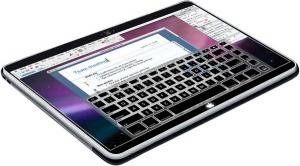
Mac's iTablet Concept
In another report/rumour the next generation of iPods are rumored to be getting cameras. Rumors from around the web are citing independent verification that the iPod will receive a camera which only makes sense as an evolutionary step.The iPod Touch seems like the most likely candidate to receive the camera as it is currently the top of the line iPod for Apple. Even more so is that the software to take pictures, record video, and edit the film is already written as the software for the iPhone. Apple has placed an order for a massive number of camera modules of the type that they include in the iPhone. These are inexpensive cameras, in the $10 range likely to be used for the iPods.
Source: http://www.neowin.net/news/main/09/07/06/ipods-to-get-cameras-in-september, http://idannyb.wordpress.com/2009/06/08/analyst-report-10-screen-itablet-in-4th-qtr-2009/