Showing posts with label Netbooks. Show all posts

Wednesday, September 9, 2009

Profiling Booklet 3G, Nokia's foray into Netbooks

Another dumb dead piece of meat from Nokia stable?

The Finns are turning up the heat and in style! Two back to back announcements on the mobile computing front seems to have turned the spotlight on Nokia World event on September 2nd at Stuttgart, where it will unveil atleast one of the two new flagship devices on which the fortunes of the beleagured Mobile giant would seem to rest. Lately Samsung, Apple and RIM have taken a lot of sheen away from Nokia lately.
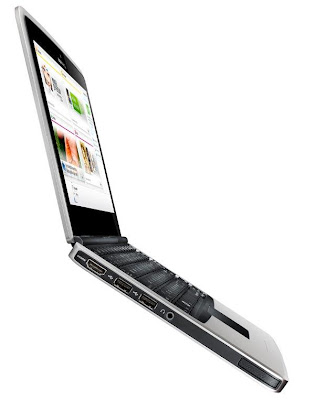
The first would be Nokia’s first foray into the wworld of netbooks, with its Booklet 3G. Nokia Booklet 3G is based on Intel Atom processor, features 10.1” screen, weighs 1.25 kilograms, measures “slightly more than two centimeters” and supports 3G/HSPA and Wi-Fi connectivity as well as A-GPS support. The netbook also sports Nokia’s broad suite of Ovi services. Besides, the mini-laptop comes with an HDMI port for HD video out, a front facing camera for video calling, integrated Bluetooth and an SD card reader. It is rumoured that Booklet 3G runs Microsoft Windows 7 Home Premium, an operating system that lacks certain security and other features that enterprise users may require. Moreover, the system features 10.1” screen, low-performance Atom processor, lacks DVD playback, but weighs 1.25kg, just like a fully-fledged business-oriented ultra low-voltage notebook. Overall, those peculiarities do not make Nokia Booklet 3G as a good mobile PC for travelling.It does pack a 12 hour Hercules battery which is so in line with Nokia’s DNA! The 12 hour battery is a dream and a differentiator in a world of netbook wannabees!

The world of netbooks is becoming increasingly crowded and the party will hit the deck with the iTablet that is scheduled sometime early next year. So long, it is a rat race and Nokia joins the hoard. While there are many views on which way the device evolution is leading upto, my take is that netbooks are just another step in device evolution and this evolution would finally end somewhere in the smartphone space or thereabouts. In that respect, Nokia could have done better getting its smartphone portfolio and user interface in order, rather than descend into the crowded spaces of Netbooks. We will watch how the Booklet with the Nokia tab does for Nokia. If the prices are as indicated, around the $799 range, then this like the N 97 could end up becoming the non starter. Granted that the device looks neat and dapper, but it is only incremental in what it brings to the table not radical enough.
Overall, it remains to be seen, whether Booklet 3G becomes popular. But at this point it does not seem to be a successful return of Nokia to the world of x86-based personal computers. Instead, Booklet 3G looks like a test vehicle to investigate the needs of Nokia’s clients.

Watch the Nokia Booklet 3G on the following YouTube Videos:

Monday, July 6, 2009

Apple: iTablets and Camera iPods

Apple's quest for relentless innovation keeps the technology geeks wondering and guessing on its next product line additions.
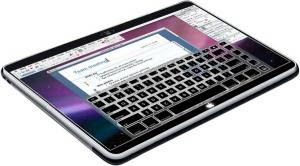
In what may be seen as Apple's first venture into the world of netbooks, Apple seems to be readying up a Qtr 04, 2009 10'' screen iTablet using Infineon Chips and ARM technology.The Hon Hai Precision Industry is rumored to be producing the netbook for Apple.

Mac's iTablet Concept

In another report/rumour the next generation of iPods are rumored to be getting cameras. Rumors from around the web are citing independent verification that the iPod will receive a camera which only makes sense as an evolutionary step.The iPod Touch seems like the most likely candidate to receive the camera as it is currently the top of the line iPod for Apple. Even more so is that the software to take pictures, record video, and edit the film is already written as the software for the iPhone. Apple has placed an order for a massive number of camera modules of the type that they include in the iPhone. These are inexpensive cameras, in the $10 range likely to be used for the iPods.

Source: http://www.neowin.net/news/main/09/07/06/ipods-to-get-cameras-in-september, http://idannyb.wordpress.com/2009/06/08/analyst-report-10-screen-itablet-in-4th-qtr-2009/

Wednesday, June 24, 2009

Intel and Nokia join hands for Linux based Netbooks

Nokia, Intel explore the Open source route for developing the netbook. While this is a step in future for the likes of Nokia and Intel and an extension of their platforms from a new device perspective; it is also significant in terms of development of a third camp apart from Apple and Microsoft. It also holds a lot of promise in terms of benefits from open source. Reproducing the first reactions: http://crave.cnet.co.uk/laptops/0,39029450,49302736,00.htm

Intel and Nokia have announced a long-term relationship that will see the development of Intel-powered, Linux-based handheld mobile-computing devices.

The partnership between the chipmaker and handset manufacturer was announced on Tuesday, 23rd June 2009. Under the deal, the companies will collaborate on several open-source mobile Linux software projects, and Intel will license HSPA/3G modem intellectual property from Nokia.

"This Intel and Nokia collaboration unites and focuses many of the brightest computing and communications minds in the world, and will ultimately deliver open and standards-based technologies, which history shows drive rapid innovation, adoption and consumer choice," Anand Chandrasekher, the general manager of Intel's Ultra Mobility Group, said in a statement.

The partners will cooperate on developing common technologies for Intel's Moblin and Nokia's Maemo, which are both Linux-based operating systems. Moblin is currently under development for use in netbooks, mobile internet devices (MIDs) and other devices, and Maemo is the operating system that Nokia has used for its N800-series MIDs.

In September, Nokia said the next version of Maemo will incorporate 3G technology for the first time. Until now, devices such as the N810 have relied on Wi-Fi for their data connectivity.

"Enabling common technologies across the Moblin and Maemo software environments will help foster the development of compatible applications for these devices — building on the huge number of off-the-shelf PC compatible applications," the companies said in their statement. "The open-source projects will be governed using the best practices of the open-source development model."

The companies also said they will use open-source technologies from Mozilla, oFono, ConnMan, X.Org, BlueZ, D-Bus, Tracker, GStreamer and PulseAudio.

Nokia's handsets are all based on ARM-based chip architecture, which has become a key rival to Intel's x86-based architecture. ARM has dominated the mobile phone market, and the x86 is the basis of most desktop computing, but both are now targeting the netbook market.

In a conference call on Tuesday, Chandrasekher said Intel's deal with Nokia aims to "work this [x86-based] family of architecture into future mobile devices", but he declined to specify what kinds of devices were being planned, or when they might appear.

Kai Öistämö, Nokia's device chief, also said in the call that ARM-based architecture "continues to be an important part of Nokia's future".

Telecoms analyst Dean Bubley, of Disruptive Analysis, said on Tuesday that the deal suggests Nokia is not confident that its Symbian mobile phone platform — currently in the process of being open-sourced — will "scale to non-phone devices".

"There is clearly a concerted effort by lots of people, whether it's in the Android or non-Android Linux community, to have a go at Microsoft and Apple's incumbency in notebooks," Bubley said. "The first round of Linux-powered netbooks did not get acceptance in the mass market — average punters preferred XP because they knew how to use it. There is a vision that a Linux-based platform can change that, but I'm really not sure."

Intel is a prime backer of WiMax, a long-range wireless technology that is a rival to 3G. Bubley hypothesised that, in those markets where WiMax becomes popular, many users will still need 3G as a back-up, due to patchy WiMax coverage and the need to roam into non-WiMax-covered areas.

"Intel could want to create dual-standard products that use both WiMax and 3G," Bubley suggested.

http://www.cnn.com/mobile/218101057;jsessionid=KTNYFU0QUAWKKQSNDLPCKH0CJUNN2JVN?cid=ChannelWebBreakingNews
http://www.telecoms.com/12299/intel-teams-up-with-nokia-to-build-mobile-platform
http://technology.iafrica.com/news/technology/1758481.htm

Friday, May 15, 2009

Should i use a netbook?


Nokia’s decision to get into the Netbook space raised a few speculations but then it was the vindication moment of the fact that Netbooks are here and they are here for good as a communications device of the future. The Netbook space is heating up quick and fast and the production lines at the Chinese ODMs are perhaps running on overdrives.


A Netbook is different than a notebook or laptop. It's built for web browsing, emailing, and word processing. You can also remote in to the office and use applications remotely. They are small, lightweight, and have a low processing power. They generally cost much less than a normal laptop at around $50 - $350. They come with a small screen, small keyboard, and a wireless connection. Nearly all laptop work is made up of email, surfing, spreadsheets and a few power-points and since, there is a fair bit of travel involved for the user, the slot for a mobile SIM card would set up the machine for a complete communications and computing solution.


However, the need for a notebook purchase has to be analyzed well, since these are personal devices. (It is bit like choosing your own wand in the Harry Potter series: You need to check the compatibility between the device and your habits/usage).Consider the following:


  1. Screen Size: We are used to 15 – 17 inch screen sizes and it can be difficult for the eyes to adjust to a 8 inch monitor.
  2. KeyBoards: The smaller keyboard can cramp the hands very easily
  3. With its limited processing power, running MS Office any other productivity-type application, may return disappointing performance
  4. Another critical drawback is in terms of security systems. With the available processing power, you can either run firewall, antivirus and anti-spyware apps or cut that out in favour of other applications.

Thus it is important that before your next Netbook purchase you analyze your requirements. If you think that your planned activity will involve running applications locally at all, you should consider a lightweight laptop, and there are few of these available which are real good (maybe a Vaio or a MacBook Air). If the applications are all "cloud"-based or remotely accessed, your Netbook would be able to do justice to you. With improvements in the cloud computing space, Netbooks will come of age in sometime and will be equally adept (like a Notebook) in handling computing and communications with all its bells and whistles.

Tuesday, May 12, 2009

Netbooks: The new species

The convergence of personal computing and mobile communications is a near reality as different companies use different platforms to marry these services together. The driving force today is the internet"ization" of business, economy and life as a whole. This creates exciting opportunities in the market today in terms of innovation, platform building, product development and the development of the single window of access to the digital world. It is widely believed in the technology space that most of the first time users in the developing states will experience Internet for the first time on their mobiles.

With that background, one can see the technology war heating up in the internet access device space. On one side you have the mobile technology players: Nokia, Samsung, Sony Ericsson, Motorola who are migrating mobile usage from a talk/SMS centred one to a complete internet experience. On the other hand you have computer majors such as Apple, Acer, Dell who are venturing into the smartphone space. There is a niche of eco-system players like Google and Microsoft who are owning up the content eco-system in a very unique way by leveraging services. Software and Services is another platform which companies such as Apple, Google, Nokia, RIM and Palm are focussing their strategies upon to create stickiness!
The Hardware/Services Evolution

Presently the communication and computing spectrum is split under the Lap Tops and Smartphone space. Going forward it is unlikely that either of these devices is going to be out moded completely. Both have their own utility and it is unlikely that any new device would radically substitute them or take their space completely! There will be stages of evolution on the Lap Top and Smartphone eco-systems as technology would evolve.

However, we would also see the evolution of Netbooks, a fusion between Lap tops and Smartphone providing the Internet solution on the go. The change into the 3G/4G technology and the advent of Cloud Computing and other services: SaaS, PaaS would enable this evolution. The Netbook would be an improvement over the smartphone in terms of its internet and software capabilities, screen and convenience, but wouldnot provide the whole host of features that the lap top would provide. Essentially it would be lesser than Lap Tops on memory and its primary use would be to access the internet. Apart from its memory capacity, it would use the cloud as its hard drive. Thus the three categories of internet devices would be so positioned:
Smartphone: Internet enabled voice communication devices. It would offer Social Networking, Navigation as value adds to its basket of services. It would essentially be based on Portability.

Lap Tops: The full monty on computing with data storage, internet access etc.

NetBooks: The internet device per se which would bridge the Smartphone and Lap Top capabilities.

The following table depicts the growth rates expected in the Lap Top versus Netbook across the world.


Whether the Netbook will replace the Lap Top or not will depend upon these three factors:
1. 3G/4G data evolution providing fast computing
2. Advent of Cloud Computing and the ability to use the internet as a enabler and dump for all software services
3. Security perceptions and concerns about data in the internet

Tuesday, March 3, 2009

Examining the case for Nokia Netbooks

Lap Top makers Lenovo, Dell, and Acer have announced their ventures into the smart phone space. I had covered a few of these in earlier blogs.
http://technologyandtelecom.blogspot.com/2009/02/smartphone-debut-dells-mephone.html
http://technologyandtelecom.blogspot.com/2009/02/lenovo-promising-smart-phone-debut.html
http://technologyandtelecom.blogspot.com/2009/02/toshiba-timeline-iphone-in-its-sights.html

Now, the king in the mobile space, Nokia takes the battle to the enemy camp by announcing its foray into netbooks. Olli-Pekka Kallasuvuo mentioned in a recent interview that Nokia was “actively looking” at the laptop market as the cellphone and mobile PC markets get closer and closer to convergence (read article http://www.reuters.com/article/technologyNews/idUSTRE51O6Z320090226). This had created the immediate buzz that it was expected to create around the technology geeks and followers around the world.However, this is more than i-fight-you-at- your-home-while-you-fight-me-at-my-home motive out here (meaning Nokia fights the lap top makers with its entry in that segment, even while Lap top makers try to prey on smartphone space). For starters, Nokia was already the largest computer maker in 2008, if the smartphone population are allowed to be counted in as computers.

An interesting line of thought that has featured in Nokia Conversations (Nokia's informal PR window to the world) is about how "mobile lifestyle" is fusing with "mobile computing" even as internet apps change the mobile phone from a medium of communication to projectors of our selves in the cloud. (Suggest the article as a compulsary read). Essentially, there are three major take outs from the article
1. Mobile devices will have to evolve to more creative usages in networking people.
2. The Cloud will be a platform where people would needto project themselves as a means of communication with others
3. Hence the need for a netbook device!

The article very beautifully explains the device story behind the need to graduate from Mobile Computing to Cloud enabled netbooks. So Nokia's device strategy follows the convergence story as it unravels and transitions from a N 97/ iPhone to netbook!Interesting times, as industries converge and new paradigms emerge. However the question that pops up is, whether Nokia is doing things one too many? Its 2007 - 2008 strategy has revolved around services and even after a while, Ovi is not exactly "there" in terms of consumers, services, applications and stickiness. The opportunities for Nokia's software services would surely outweigh the cost of building a commodity consumer electronics device.

The first reaction to this one is Nokia shouldn't be looking at the netbook space. They've got enough on their plates at the moment, the new devices need attention and promotion, it will confuse the marketing message, there's very little profit in commodity devices...

On the other hand the Netbook can be seen as a natural device extension of the Ovi platform which links up from the consumers to the crowd.

My take on this is Nokia should be looking at its services eco system foremost. Netbooks will seriously not be an differentiator in the age of content and the internet. Investements in the netbook may not be both time, investment and attention consuming for very little returns.