Showing posts with label iPhone. Show all posts

Tuesday, August 25, 2009

Profiling Windows Mobile ( Part I): Does Dual platform make sense?

Windows Mobile is old. The basic UI and underlying technology is the same today as it has been for years. Windows Mobile is not exactly the best mobile solution around. Neither is it “exactly profitable” according to Steve Ballmer! All too often Microsoft has been accused of not having a coherent Mobile strategy. Android which is about a year old now is far more “happening” and “exciting” according to smart-phone users and smart-phone makers. The case in point here is HTC conversion from WinMo to Android. Now, there has been a lot of noise around Windows Mobile 7.0, the purported OS that will resurrect Microsoft’s flailing fortunes with its Apple iPhone like interface, browsing and experience. This one will be Microsoft’s answer to Apple.Microsoft will take Winmo 7.0 to market by Q3/4 2010. That’s a bloody hell of a wait.


Windows Mobile may not be irrelevant, however, it needs a technology facelift — and it needs it now, not a year from now. That is where, Winmo 6.5 intends to step up as a placeholder. Microsoft is expected to officially launch Windows Mobile 6.5 on October 1, 2009 and add an upgrade version with a touch interface in February 2010, the sources indicated citing Microsoft roadmap.Microsoft will not phase out Windows Mobile 6.5 from the market but will lower the OS price, when it launches Windows Mobile 7 scheduled in the fourth quarter of 2010.

This also means that for sometime after the launch of Winmo 7 both the platforms will be around together. Microsoft will be using a “dual-platform” strategy to compete with Android and the iPhone. Winmo 6.5, due to be rolled out October 1, will compete with Android, while WinMo 7 will compete with the iPhone. One cannot also deny the fact that Winmo 6.5 will not compete against Winmo 7.0 and it will take some degree of product planning with the Microsoft product teams to minimize collateral damage between 6.5 and 7.0. For the Microsoft team, 6.5 followed by 7.0 also gives them the following advantages:
  • Windows Mobile is entrenched in its current form and that inertia is going to be difficult to overcome.
  • At the same time, there’s pressure to compete at a lower level with a lighter and savvier OS — something 6.5 really isn’t able to pull off
However from the consumer perspective, 2 legacy systems is a bad idea-as Microsoft has proven over and over in various arenas. The other option may be to take 6.5 off the table, focus on 7, provide updates on the current 6.1 version but make sure enough soft back-compatibility to let businesses make the changeover once Winmo 7 is unveiled.

Ref:
http://jkontherun.com/2009/08/20/can-microsoft-turn-the-big-windows-mobile-ship-around-in-time/
http://www.mobilecrunch.com/2009/08/19/microsoft-to-pit-windows-mobile-65-and-7-against-one-another/
http://www.digitimes.com/news/a20090819PD210.html

Saturday, August 1, 2009

Anticipation @ Apple: iTouch takes the digital connect further

Digital content has been available for years, but the right vehicle to consume the content has been lacking. Will Apple bridge this gap with the iTouch (iTablet in a first few posts)
In March, Reuters reported that Apple had ordered a substantial batch of 10 inch touch-screens from Taiwan to be delivered in Q3 of 2009. In April, the Wall Street Journal reported that Steve Jobs was actively involved in the development of the Tablet. In July, the China Times reported that Apple will debut their new product in October for $800 after agreeing to production deals with Foxconn, Wintek, and Dynapack. TheStreet.com is reporting that Apple will release a subsidized Tablet through Verizon. In the July earnings call, Apple management went out of their way to trash the netbook space but they refused to deny the coming Tablet, saying they will only release products that are ‘innovative and that they are proud of’. These are all reputable sources that seem to unveil the secrecy surrounding the pending product. Will the tablet have a substantial impact on Apple’s core business? This device is taking its place at the high end of the iPod family; it will be a larger version of the iPod Touch. This product won’t fall quietly into place however. The iTouch Tablet launch is primed to be the most significant in the history of Apple.


1) Apple Finally has an App Machine. Steve Jobs has mentioned that he has never seen anything like success of the App Store in his career. If he is saying that, then I’m saying that this 9.7 inch iTouch that has been designed to optimally utilize the apps will become the flagship Apple product. We are witnessing a transition in the way the Internet is used. Mobile content requires a tailor made user experience that is not efficiently delivered by the traditional website model. Although we have grown accustomed to navigating the Web by browsing websites on our PC, consumers are showing an affinity for the App Store model. Mobile Apps are designed for usability and the 1.5 billion downloads thus far from Apple’s App Store clearly demonstrate a user experience in high demand. The trend is in place that shows consumers will desire an app rather than visit a website. Perhaps we will one day see that apps are more popular than actual websites. The unspoken secret about the iPhone is that it wasn’t designed to become the ultimate App Store device. The screen is too small. The order of operations for the iPhone are phone first, iPod second, Apps third, and Internet browser fourth. This new iTouch is principally designed to take advantage of the App Store gaming, books, news, entertainment, social networking, etc…


2) Mobile High Speed Connectivity. Until now, a truly portable Internet device hasn’t been possible because of the scarce network availability. Verizon’s new Mi-Fi technology appears to be changing the landscape as it enables a Wi-Fi connection anytime and anywhere. It’s looking like this iTouch will mark the beginning of a relationship between Verizon and Apple. The anytime and anywhere connection will allow this product to serve as an up to the moment e-reader. By next year, we will all be wondering how the newspaper industry survived as long as it did with its outdated paper delivery model. The iTouch will replace newspapers, magazines, and books. Imagine a college student not having to lug around his $600 worth of textbooks each semester. Imagine not having to load up on magazines at the airport. The digitization of education and media has arrived. This is the first device that caters to digital readers on the go. Amazon’s Kindle was such a poor attempt that it’s not even worth analyzing. Same goes for the netbook fad.


3) Free Communication. Why do I think the iTouch will be more significant than the iPhone? Because the trend of communication technology is being routed away from wireless cellphone carriers and towards the Internet. Through the use of Skype you can make phone calls over an Internet connection and through the use of Apple’s iChat you can communicate by video for free. There are no overage charges, there are no hidden fees, you just pay for your Internet connection and communicate at will. The rumors are swirling that the next generation iTouch will include a camera and a microphone thereby making this capability a reality for Apple customers.


4) No Carrier Exclusivity. There is no doubt that iPhone sales have suffered because of the exclusivity agreement between Apple and its carriers. In the United States there are millions of Verizon and Sprint customers who would love to have the iPhone but don’t want to switch to AT&T . It appears that the iTouch will be openly available. All those people who wanted an iPhone but couldn’t make the carrier switch will flock to the iTouch Tablet. Apple will struggle to produce enough of these to meet the demand.


Being a member of the iPod family means that this new iTouch will be announced at the typical iPod refresh event during the first full week of September. The euphoria of Steve Jobs being back on stage introducing a revolutionary new product will cause the stock to surge ahead of the unveiling. Seeing adults stand in line while wearing their pajamas in the early morning hours to purchase the first iTouch Tablet will cause the stock to react again in October. The conclusion is simple. Apple owns the tech revolution. The rise of the dot-coms got out of control at the beginning of the decade for all the right reasons but the infrastructure wasn’t ready to justify the digital transition. Now that the infrastructure is ready, society will embrace the iTouch Tablet in a way that might even surprise the visionary himself.


http://seekingalpha.com/article/151137-why-apple-s-itouch-tablet-will-become-its-flagship-product?source=yahoo

Thursday, July 30, 2009

iPhone users most satisfied lot (A US study)

Though Apple continues to hype the iPhone and the multitude of applications available through its App Store, iPhone users are indeed the most satisfied smartphone users and exhibit the strongest brand loyalty, according to a recent survey compiled by analytics firm Crowd Science.

Of those surveyed, 40 percent use a smartphone and one-third of those are iPhone users. The iPhone users gave Apple’s smartphone a 73 percent overall satisfaction rating, compared with a 52 percent satisfaction rating from users who had a BlackBerry device from Research In Motion and 41 percent who were satisfied using another smartphone.

Further, iPhone users plan to stick with the device, according to the survey. Fully 82 percent of current iPhone users would buy an iPhone again, compared with 39 percent of BlackBerry users who would purchase a BlackBerry again. Additionally, the survey found that 38 percent of non-iPhone users would switch to the iPhone for their next phone purchase, compared with 14 percent of non-BlackBerry users who said they would get a BlackBerry as their next phone. One final iPhone stat: Ninety-seven percent of current iPhone users surveyed said they would recommend the device to someone else.
Of the total sample, four out of ten use some type of smartphone and one-third of these use an iPhone.Among those possessing a smartphone, most use it for both business and personal purposes (71 percent), with only 3 percent who use it for business only.”
IPhone users exhibited higher overall satisfaction with their phone than Blackberry and other smartphone users

IPhone users exhibit a strong loyalty to the brand. An overwhelming majority of iPhone users (82 percent) would purchase an iPhone again. As for non-iPhone users, almost four-in-ten (38 percent) would switch to iPhone for their next purchase, while 14 percent of non-Blackberry users would switch to Blackberry for their next mobile phone purchase.

While there are irregularities in the data collection mechanism and iPhone users have been given more weightages (compared to Blackberry, which numerically is larger than the iPhone), the results could be looked at from a “directional” perspective.

Ref: http://www.fiercewireless.com/slideshow/numbers-iphone-brand-loyalty?img=2

Apple: What Next?

Apple’s Q3 results have been very good! The thought is that this is Apple’s brightest hour and having hit the peak, there is no way but a gradual slide down. However there is more in the communication from Apple on how they let their own products cannibalize themselves and how they are innovating the future! Apple COO stops short of naming iTablet as the next from Apple Stable

Ref: http://online.wsj.com/article/SB124820913514969595.html; http://online.wsj.com/article/SB124821056118269783.html; http://blogs.wsj.com/digits/2009/07/21/live-blogging-apple-earnings-2/

Apple has been heaped with praises for its non-conformist strategy and super-hit portfolio of products which have upstaged the industry incumbents. The Q3 results declared this week have been Apple’s moment in history! Third-quarter sales rose to $8.34 billion, up from $7.46 billion a year ago, due in part to strong sales of the iPhone. Net income rose to $1.23 billion, up from $1.07 billion. Apple’s growth of 4% with IDC forecasting negative 3 percent and Gartner forecasting a negative 5 percent, puts them 7-9 points ahead of the market.


  1. Response to the new iPhone 3GS has been tremendous with over 1 million sold by the third day after its June 19th launch. Apple goes on record saying that they are currently unable to make enough iPhone 3GSs to meet demand and are working to address that.

  2. Apple registered outstanding sales of 2.6 million Macs setting a new June quarter record and nearly meeting the all time quarterly record.

  3. Apple sold 10.2 million iPods which was down from 11 million in the year ago quarter. There were two key reasons for this decline: First, we reduced channel inventory by over 400,000. Second, sales declined by 4% year-over-year.

  4. The iTunes store delivered another great quarter fueled by strong sales of music, video and apps.

  5. Apple retail stores hosted 38.6 million visitors during the quarter compared to 31.7 million visitors in the year-ago quarter –an increase of 22%.

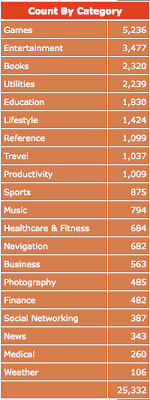
  6. Apple’s app store has more than 65,000 apps, compared with 1,000 to 2,000 at the Nokia store. Apple thus has a substantial lead on apps.

There were a few significant announcements during the earnings call, which warrant attention.

The first point
The iPod growth story now appears to be tapping off. Shipments of iPods fell 7% from the first quarter to second. And iPod ASPs also declined, despite the growth of the more expensive iPod Touch.

Revenues from selling Mac computers actually fell 8% last quarter compared to a year ago. The company sold 4% more Macs than it did in the same period last year, at a lower price point.
Macs and iPods are slowing down and may be entering the declining plateau stage of their life cycles! Apple would have seen this coming, and the $99 iPhone would be cannibalizing the iPods, by design.

Secondly, if you read between the lines of Timothy Cook’s message, it appears that Apple has a trick up its sleeve. Quoting Apple COO, Timothy Cook

“I think some of the netbooks that are being delivered, or many of them, are very slow. They have software technology that is old. They don’t have a robust computing experience. They lack horse power. They have small displays and cramped key boards.”

Is this what Apple is going to spring upon Netbook manufacturers?

The invective makes you think that while Apple rails against the existing Netbook makers, may be, it has a net-book product that it plans to launch soon! Is this the Apple heralding its iTablet.

Profiling the slide at Nokia (Part II)

Nokia’s Age of Denial

While touch-screens had always been around, it was the iPhone in June, 2007 that had caught everyone’s imagination with its form, function, features and applications. Till then, Nokia’s N and E Series devices were the ultimate in technology. In Q2,2007, Nokia launched the iconic N 95, a do-it-all smart-phone that captured the imagination of the world. Nokia missed the trend, as it was basking in the glory of N 95! Nokia regarded the Haptile feed as a fad which would mellow down. That was not to be and Nokia realized it the harder way.

August 2008: Nokia launched an offensive against the iPhone 3G by announcing the successor to N 95, the N 96! By then, Nokia had taken note of iPhone’s initial success in US. However iPhone without operator subsidies outside the American shores was a doubtful starter (as proven in the case of India, where the iPhone could not live up to its hype because the carriers (Airtel and Vodafone) did not subsidize it). Positioning the N 96, which was only a few additions to N-95 against iPhone 3G was only a subterfuge. Nokia was trying to play the game on its own terms where as iPhone appeal to the consumers was becoming painfully evident.

July 2009: This was the first time that Nokia played Apple on a level game. The N 97 which was Nokia’s haptile flagship device fared badly against the Palm Pre and the iPhone 3GS. Nokia’s smartphone portfolio was getting depleted and except the E 71 and its other versions, there was a serious lack of a smartphone from the Nokia stable! The fight between N 97 and iPhone was already dubbed as the fight between device and software. Apple with its sexy and neat looks, brilliant browser and UI and Apps store turned the game on the N97. Even Palm Pre with its WebOS was cooler than the N97!

What lies ahead

Nokia will now have to re-think its smartphone strategy in order to stay in the game.
Product design: Most of the Nokia phones look and feel like some other Nokia phone. E71 was a success, they augmented it to E 63, E 72.

A new OS that would make UI and browsing experience pleasurable. There is a space to learn from Apple, Android and even the Palm!

Need to look at open sourcing solutions. While they had the first Apps market (Forum Nokia), they lost the plot mid way and allowed Apple to get away with the Apps Market. Failure to differentiate on Apps and Services was a big mistake on hindsight.

Need to be more collaborative rather than closed in its approach. Nokia’s stiff approach to working with the other partners in the eco-system has cost then dear in the Developed markets.
Mobile Internet may well be the next in devices. Enabling a superior browsing experience is key to greater user acceptability. That is again something that Apple and Palm have perfected.

http://www.thestreet.com/story/10545980/1/tech-rumor-of-the-day-nokia- needs-palm.html

Thursday, July 23, 2009

Apps Store: 1.5 billion downloads later, the Apple juggernaut continues

Beating the likes of Google, Nokia, RIM and Verizon, Apple has already taken the honours in the Apps store roll outs. It has also sold 1.5 million mobile applications for its iPhone and is counting more. While consumers find easy to buy apps by using the familiar iTunes interface; for apps publishers, the Apps stores provide the most efficient way to sell as operation and distribution costs are nil and the developer can afford to focus his resources in promoting his product on the Apps store.
The SDK 3 platform from Apple is also gaining more acceptance by more developers over other platforms for developing apps. To put it concisely, the competitors are unable to create a world that revolves around their products, a trick that Apple has mastered well.
The only other vendor that understands branding at that level is Nokia but then it is caught up in its own Smartphone problems and the Ovi Store has not had a great start. The other company RIM, continues to focus on the physical device at the expense of apps driven excitement.

Tuesday, July 21, 2009

1.5 Billion downloads later, the Apple juggernaut continues


Beating the likes of Google, Nokia, RIM and Verizon, Apple has already taken the honours in the Apps store roll outs. It has also sold 1.5 million mobile applications for its iPhone and is counting more. While consumers find easy to buy apps by using the familiar iTunes interface; for apps publishers, the Apps stores provide the most efficient way to sell as operation and distribution costs are nil and the developer can afford to focus his resources in promoting his product on the Apps store.


The SDK 3 platform from Apple is also gaining more acceptance by more developers over other platforms for developing apps. To put it concisely, the competitors are unable to create a world that revolves around their products, a trick that Apple has mastered well.

The only other vendor that understands branding at that level is Nokia but then it is caught up in its own Smartphone problems and the Ovi Store has not had a great start. The other company RIM, continues to focus on the physical device at the expense of apps driven excitement.

Wednesday, July 8, 2009

iPhone 3GS:Blockbuster yet again


From the first assessment, Apple’s iPhone is a runaway hit worldwide. earlier today based on a new set of numbers from Japan.


An analyst report from Piper Jaffray analyst Gene Munster’s, includes the incredible fact that 38 percent of 3GS customers were upgrading from the original iPhone, validating the idea that the only way for a customer to upgrade from an iPhone is to buy another iPhone.


The report of iPhone 3G S sales is based in part on observations of Apple and AT&T stores in New York and Minneapolis, estimates of the rates of sales, the hours of operation and the number of units supplied to each store, as well as surveys of 283 attendees.


A few pointers to the success of iPhone 3GS are as follows:
1.Roughly one million iPhones sold worldwide in three days, despite activation problems;
2.400,000 sold in the United States, 250,000 in the United Kingdom, an average of 18,000 in 19 other countries;
3.380,000 sold in the first two days (compared with 270,000 in a day and a half last year);
Sales were actually slowed by the approximately 15 minutes it took to activate each phone (sales at Apple stores last year took about 1 minute each);
4.Two-thirds of customers purchased the 16 GB iPhone (compared with last year, when 91 percent bought the top-of-the-line 8 GB model);
5.39% of customers were PC users (versus 25 percent last year);
6.38% of customers in the United States were new to AT&T, as opposed to 52% last year.


Why is Apple dominating the market like this? Quoting Giff Gfroerer, president of text message vendor i2SMS:
“what the iPhone did was give the normobs [normal mobile users] of the world a simple phone that they could understand. The [Nokia] N97 might have the best technology, but you need a Ph.D. to operate it. The iPhone gives the end user what they need in a very simple format and is not concerned with functionality the normob does not need.”


A simple axiom that Apple seems to be following is to give people what they want and they might buy it. In droves. Pretty simple concept. Hard to execute. (If the Nokia and Apple examples are considered)


What is hugely encouraging for Apple is that a survey of 2300 retail stores reveals that Apple has cleaned up in the smartphone market in Japan. This is the first time, when the iPhone craze has crossed the Pacific from the US shores. http://www.tgdaily.com/content/view/43098/145/


While there are some doubts on iPhone’s capability to sustain the Japanese response to the iPhone 3GS (owing to the fickle nature of the industry and the faashion conciousness of Japan), There is no doubt that iPhone could prove popular (if not the best seller) in the internet savvy Japan. They may have to tweek it a bit here and there, but the makings of succesful product are there. http://industry.bnet.com/technology/10002498/iphone-godzilla-swallows-japanese-cell-phone-market/


Already iPhone has beaten Nokia in the leadership of mobile ads. http://industry.bnet.com/technology/10002452/iphone-overtaking-nokia-worldwide/

Monday, July 6, 2009

Apple: iTablets and Camera iPods

Apple's quest for relentless innovation keeps the technology geeks wondering and guessing on its next product line additions.
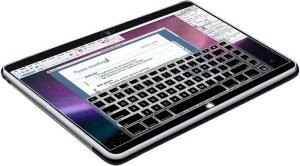
In what may be seen as Apple's first venture into the world of netbooks, Apple seems to be readying up a Qtr 04, 2009 10'' screen iTablet using Infineon Chips and ARM technology.The Hon Hai Precision Industry is rumored to be producing the netbook for Apple.

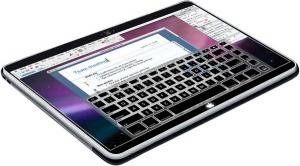
Mac's iTablet Concept

In another report/rumour the next generation of iPods are rumored to be getting cameras. Rumors from around the web are citing independent verification that the iPod will receive a camera which only makes sense as an evolutionary step.The iPod Touch seems like the most likely candidate to receive the camera as it is currently the top of the line iPod for Apple. Even more so is that the software to take pictures, record video, and edit the film is already written as the software for the iPhone. Apple has placed an order for a massive number of camera modules of the type that they include in the iPhone. These are inexpensive cameras, in the $10 range likely to be used for the iPods.

Source: http://www.neowin.net/news/main/09/07/06/ipods-to-get-cameras-in-september, http://idannyb.wordpress.com/2009/06/08/analyst-report-10-screen-itablet-in-4th-qtr-2009/

Thursday, July 2, 2009

Mobile Ads: Apple betters Nokia

Nokia has lost its overall market share leadership in the worldwide smartphone segment to Apple, based on browser calls for mobile ads. The mobile ad share is important because apps drive customer loyalty more than hardware features.

Gartner had noted in its most recent report on the smartphone market that “services and applications are now instrumental to smartphones’ success.” That report, reflecting first quarter 2009 figures, had Nokia still firmly in the lead. But according to numbers from mobile ad service vendor AdMob, Apple smartphones received 49 percent of ad traffic in May, compared with 32 percent for Nokia. Apple offers many more apps, and thus it’s more geared to consumers than Nokia.

Apple's frictionless system and huge customer base, feeds a virtuous cycle of more apps for the App Store leading to more customers for Apple’s iPhone. Apple had the advantage of the years of experience with iTunes and their iPods PLUS their own acceptable billing solution and that has served them well. Industry sources are of the opinion that other stores simply aren’t matching the ARPUs [average revenue per user] of the Apple App store

Friday, June 19, 2009

Will N 97 do it for Nokia? (gain Tech leadership)

The 3rd week of June 2009 is momentous in terms of the ground breaking new launches that we would have redefining the smartphone space. Palm is alll set for a return with its highly touted Pre challenging the iPhone. There are guesses and second guesses on whether Pre would be the iPhone killer. iPhone gets the 3.0 makeover which essentially puts it in par on many other departments as far as smartphone capability is concerned. However, iPhone will all be about the Apps that they can bring to the table. Nokia N 97 on the other hand is Nokia's flagship salvo to claim its own technology leadership space in the smartphone category. In as much as it will be against the iPhone, the battle between N 97 and iPhone will be one between Device and Markets. This article com compares the N 97 against the formidable iPhone on various departments.

N 97 versus iPhone
The fight between web-based and mobile-based players has officially started this week. On Monday, Apple announced its latest phone, the iPhone 3G S, which will go on sale next week. And on Saturday, Palm started selling the much-hyped Pre.
This comparison seems like one of hardware vs. applications. If this is a smartphone device market, the iPhone is four year late. If this is an app awareness market, Nokia is one year late. Analysts world over are watching these launches as a toss up between Device driven smartphone market or Apps driven smartphone market.
The Nokia N97 seems to have better hardware, where the iPhone 3G S and its App Store are second to none. The latest iPhone marketing campaign was smart enough to pinpoint the main competitive advantage into their next wave of customers: "there is an app for that."
The average iPhone user seems to behave either as a teen or a teen at heart, and loves having fun with useless and exciting apps thrown away as rapidly as they are downloaded, like a Facebook app. More than 1 billion downloads later, less that 5 percent of those who downloaded an iPhone application are actively using it after 21 days and only 10% of apps retain the audience attention, according to a PinchMedia survey. Nokia's target market demographics may be different, more for professionals and professional use.
The other differentiator for Apple is the "user experience": Understanding it, being in control of it and finding joy in handling it. Something that Apple does perfectly, and Nokia's Symbian-Interface does not do as well. Apple's forte is their vast experience with user industry-leading GUIs.
Neither T-Mobile and AT&T, the two US operators that could have subsidized the Nokia N97, has picked it up (yet?). As a consequence, at more than $600 Amazon price, the N97 is unlikely to be a threat to the latest iPhone in the US
Each of these devices can be bought for far less than the Nokia N97. The 16GB iPhone 3G S will sell for $199. And the 32GB model, which has the same amount of built-in memory as the N97, will cost $299 when the phones go on sale next week. Apple has also cut the price of its 8GB iPhone 3G, introduced last year, to only $99. The Pre, which also has a slide-out QWERTY keypad and a touch screen like the N97, is $199 with a $100 mail-in rebate.But there is a catch; these low-priced smartphones come with strings. Consumers must sign a two-year contract to get the discounted prices. And in the case of the iPhone and the Palm these phones are exclusive to one carrier. Subscribers are also charged an early cancellation fee if they terminate their contract before it ends.Even with early termination fees, the iPhone and Pre are still less expensive than the N97. For example, a new AT&T subscriber buying the 32GB iPhone 3G S will pay $300 for the device. If this subscriber cancels his service before the two-year contract ends, he will pay at most $175. Adding the early termination fee to the cost of the phone, the iPhone subscriber will still only pay $475 for the device. This is about $225 less than what he'd pay for the Nokia N97.
Just look at Sony Ericsson's Xperia X1, which went on sale last year in the U.S. with a price tag of $800. The phone has largely been a flop in the U.S.
Nokia must realize that it can't really compete in the U.S. smartphone market without a carrier subsidy. And it's difficult to understand why the company would not be able to strike deals with U.S. carriers. After all, it is the largest cell phone maker in the world.Perhaps Nokia doesn't think the U.S. market is worth the trouble. Even though the U.S. offers the biggest growth opportunity in smartphones, which also happens to be fastest growing segment of the mobile market, analysts say that Nokia could still maintain a market share position in the 30 percent to 40 percent range by selling devices throughout the world. But the U.S. market represents an untapped opportunity that could prove very lucrative for Nokia. And the longer it takes Nokia to bring an affordable hit phone to the U.S., the harder it will be for the company to get its fair share of the pie.

Wednesday, June 17, 2009

Blackberry: Ruling the US smartphone market


On RIM and Blackberry steady rise in Smartphones in US and world markets. The reasons for its performance are its competitive pricing, availability across carriers, business expertise (security, service and reliability for enterprise users), aggressive pricing and portfolio. This article also reviews the weaknesses in the RIM portfolio where it would need to work hard and work quick so not to loose edge to the sharp competition.
Resource:CNNMoney.com

Apple's iPhone 3GS and Palm's Pre has captured a lot of hype but don't count out Research in Motion's BlackBerry just yet, say experts.
While the iPhone enjoyed an initial pop in market share after the second generation version was released last July, that share has been nearly cut in half.
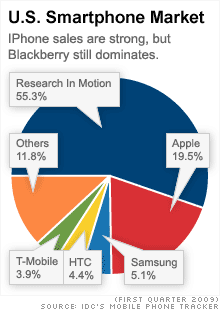
In the first quarter of this year, BlackBerrys had a 55.3% share, compared to 19.5% for iPhones, according to IDC data. Compare that with the third quarter of 2008, when BlackBerry devices controlled 40.4% of the U.S. smartphone market, compared with 30.1% for Apple.
Solid footing. Much of RIM's anticipated success lies in its ability to grow market share even as competitors launch new flashy devices.
Analysts expect that market share to grow into next year, despite the mostly negative reviews for its first touchscreen device, the Storm, and new launches from Apple and Palm.
A recent Yankee Group survey showed 41% of Americans plan on buying a smartphone for their next phone purchase, and 50% of those people plan on buying a BlackBerry. Only 25% said they would buy an iPhone.

Experts cite competitive pricing, business expertise and new consumer products as reasons for RIM's sustained growth.
Pricing. RIM may not offer the interactive operating system experience that the iPhone, Pre or Google's G1 phone offer, but RIM offers BlackBerrys that beat them in end user cost.
That's because every major U.S. wireless carrier offers at least one BlackBerry device, unlike competitors, which have exclusive contracts with AT&T, Sprint and T-Mobile. With the carriers fighting for customers, many offer discounted rates, including Verizon's aggressive "buy one get one free" promotion for its BlackBerry line.
Analysts say wireless providers can afford to offer competitive pricing because BlackBerrys cost less for them to operate than iPhones and Pres.
"RIM's design is much more bandwidth-efficient than its competitors, so carriers make the most money off the BlackBerry platform," said Nick Agostino, RIM analyst with Research Capital Corp. "Once two carriers in the same market offer BlackBerrys, they start to compete against one another and RIM is the beneficiary."
The campaign appears to be working. Exclusive iPhone carrier AT&T has as many BlackBerry users as iPhone users, according to Andy Castonguay, director of mobile device research at Yankee Group.
"The total value of a device goes far beyond the physical phone itself," said Castonguay. "Service, reliability and functionality all play a part in the total valuation, and BlackBerry continues to distinguish itself in those terms."
Enterprise. Most experts agree that RIM has solidified its standing at the business smartphone of choice, due to its focus on security and ease of configuration.
"RIM has been very aggressive in its enterprise server upgrades, making its software even more appealing to businesses," said Castonguay. "RIM has made a name for itself in security, service and reliability, which are fundamental necessities for companies."
Still, some think that RIM shouldn't get too comfortable as the enterprise leader.
"RIM is facing bigger challenges now from a competitive standpoint than they've ever had before," said Ken Dulaney, analyst at tech consultancy firm Gartner. "The user interface doesn't match up to its competitors, and many of our clients are breaking with their previous policies just to use the iPhone. IT departments are beginning to support anything with basic security features."
Furthermore, the company still has some ground to make up in worldwide smartphone sales. It controls just 20% of the global market, compared to 41.2% for Nokia.
The company is trying to broaden its appeal to global businesses, including world travelers with its new BlackBerry Tour, which can easily access foreign voice and data networks while abroad.
What's in store. BlackBerry has increased its consumer base in the past three quarters, according to IDC, but some analysts think RIM needs to establish itself as more a consumer device.
The launch of the BlackBerry app store has helped draw consumers, experts say, and though it lags behind the iTunes app store, it has grown to become the No. 2 app store. The Pearl and Curve have also sold well, and the Storm held its own after heavy subsidies from Verizon.
But most analysts agree that RIM will need to launch a competitor that looks and functions more like the Pre to continue to drive consumer demand. Both Verizon and RIM have hinted at a release of a touch screen device with a keyboard in the third quarter of 2009.
"The Pre and iPhone pushed the envelope in what the operating system needs to be in terms of flexibility and ease of use," said Castonguay. "BlackBerry will have to adapt its operating system to become much more consumer-friendly."

Wednesday, May 6, 2009

Will Apple slip back now?

reproduced from http://www.guardian.co.uk/business/2009/may/03/apple-iphone-technology-market

"Every once in a while a revolutionary product comes along that changes everything. Today Apple is going to reinvent the phone."... That was Steve Jobs at the launch of iPhone in 2007.

The ever-expanding array of touchscreen handsets is just the physical evidence of the monumental change the iPhone has wrought. It has sent some of the largest technology companies in the world back to the drawing board and proved that, given the opportunity, people will do far more with a phone than make calls and send texts. For Apple, the iPhone may also be one of the most important products it has produced since its first personal computers in the late 1970s.

Before the iPhone there were already touchscreen devices; there were mobile phones that could play music and videos; there were mobile phones that could access the internet and send emails; and it was already possible to download applications on to some devices in order to personalise them. But hardly anyone took advantage of these features. Finding them was hard enough; getting them to work was a nightmare and most consumers gave up.

"It is not as though Apple invented a totally new technology," says Adam Leach, principal analyst at consultancy Ovum. "What they did was re-think the whole mobile experience and produce a very polished experience compared with what people were used to."

The iPhone was also aimed at a segment of the market that the giants of the handset industry had been ignoring - the "high end". Nokia, Motorola and Sony Ericsson were chasing the middle of the market where the high volumes and high subsidies from the mobile phone operators were. Their launch strategies involved upgrading their phones bit by bit - a better camera, a brighter screen or larger memory - so as to make the "new" device just a little more attractive. Making a phone a different colour boosted sales, but did nothing to persuade anyone to do more than make calls, send texts or download the occasional ringtone.

The iPhone, in stark contrast, is sexy and very, very easy to use. Since its arrival there has been a stampede back into making top-tier phones, not least because the recession has decimated the mid-market. Cash-strapped consumers are demanding a much better phone in return for signing an expensive monthly contract; if they don't get one, they are opting for cheaper Sim-only deals and holding on to their old handset.

BlackBerry rushed out its first touchscreen device - the BlackBerry Storm - to be followed by the first from Nokia, the 5800; Samsung and LG have been churning out touchscreen devices from the Tocco and the Omnia to the Renoir and the Arena. Waiting in the wings are new touchscreen devices from Palm (the Pre) and Sony Ericsson (the Idou).

The iPhone's ease of use, meanwhile, has turned the spotlight back on an often neglected aspect of mobile phones: the software. A month after the iPhone appeared in the UK, Google brought together some of the biggest names in mobile to develop a new operating system. Called Android, it has already appeared on two touchscreen devices, made by HTC, and many more are planned. A year after the iPhone appeared, Nokia bought out its partners in Symbian, which produces operating systems for smartphones. Then Microsoft rewrote Windows Mobile and its new guise - unimaginatively called Windows Mobile 6.5 - has borrowed a lot from the iPhone's look and feel.

Already more than 1bn iPhone applications have been downloaded from the iTunes store. The Android marketplace is operating, while RIM - maker of the BlackBerry - is also pushing applications at its users. Nokia's Ovi Market and Microsoft's Windows Marketplace are both set to go live this month.

In the 12 months before the handset launched, Apple raked in $22bn in revenues. That has rocketed to almost $34bn in the past year, largely boosted by the iPhone and iPod Touch. The success of the iPod made Apple's Cupertino headquarters one of the coolest places to work in Silicon Valley and the iPhone has made it one of the most powerful.

With so much now at stake, some experts suggest the iPhone will soon become the most important technology Apple's empire has produced, even, potentially, eclipsing the computer business that revolutionised our lives in the 1980s. There are an estimated 1bn personal computers in use worldwide, but that many mobile phones are sold every year and for many people their first experience of computing will be through a mobile phone.

But while Apple caused a revolution, it is unlikely to become dominant in the market. It has sold just over 20m iPhones since the first device appeared in 2007; in that time more than 1.5bn phones have been shipped by everyone else. Later this month, the first wave of British users are freed from the contracts they had to sign to grab one of the early iPhones and start contemplating a replacement, they will be faced with a range of remarkably similar devices.A similar thing happened with the personal computer market. The concept was championed by Apple when it launched Apple II, the world's first personal computer, in 1977, and the first Macintosh in 1984, but other players now lead the market.

While iPhone is the Touch Pioneer, it faces tough competition from other wannabe's in the market today. So far, the other part of the twin strategy, applications has been successful in creating a stickiness around this product. However, competitors are working hard at that as well. It will be interesting to see, whether Apple slides down despite retain its Technology leadership crown or do the folks at Apple have another ground breaking innovation around the corner.

Friday, March 6, 2009

Apple: Software Services as Differentiator

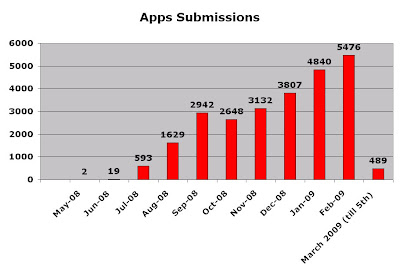
Customer loyalty is a thing of the past, or so it is believed. Not with Apple though! RIM, Nokia, Microsoft and Pre are busy in their preparations to launch their own options of App. Stores, and it might seem that this will take the wind out of Apple's Apps Store sails. Au contraire, quite the reverse seems to be the case as Apple seems to be accelerating both in terms of number of applications on their stores and the downloads. On March 5th, 2009 Apple registered its 25000th application in its iPhone store. Before this, sometime in mid January, Apple had passed the 500 million mark in downloaded applications! For full report click here!


The 25000 apps and 500 million downloads on 23 million devices act as a part of a software strategy, which creates a distinct stickiness for the iPhone and enhances customer loyalty over the long term. It is believed that the Apps personalize the iPhone to levels that competitors cannot match and consumers cannot do without. This creates a huge stickiness between the consumer and the product. A device tailored by him according to his requirements in the one thing that he needs the most and at present Apple does seem to have both the device and software wherewithall to give suffice his need.

While Apps range from free to $999, it is but obvious that the ones in the lower price brackets < $2.99 consitute 80% of the apps and probably will also feature as much in the downloads!

Wednesday, March 4, 2009

The Ascendance of Apple


This has been Apple's decade. From behind and nowhere, this Cupertino, California based hi tech company has disruptive technologies and trends and worked its own path upwards. In the process, it has emerged as America's no.1 most admired company, sales have tripled over the last 5 years and it ranks no.1 amongst Fortune 500 companies for total return to share holders over the past 5 years (94%) and past 10 years (51%). The latest feather in Apple's cap is a successive listing (2008 and 2009) in America's most admired company list and World No 1 in most admired companies list. This 32 year old company had an unprecendented run since 1997 disrupting conventional wisdom on product lines and groundbreaking new products. Led fully from the front by Steve Jobs, Apple has out thought, out innovated and out played markets and competitors alike.

Timelines, Products and Discontinuities
As stated earlier Apple has launched waves of discontinuity in industries turning tables on the existing rules of the game:
1. Pixar, which Steve Jobs bought from George Lucas in 1986, out innovated the Hollywood mainstream into full length computer animated movie making with its Toy Story in 1995. It redid its success in 1998 Bug's Life, 2001 Monsters Inc, 2003 Finding Nemo, 2004 Incredibles. 2006 Cars. Pixar is sold to Disney in 2006 making Steve Jobs Billions.
2. In 1998, Apple upturned the desk top with its colourful IMac, which became the fastest selling Macintosh ever!
3. In 2001, which is arguably Apple's biggest year till date, it released the iPod, iTunes and OS X operating system. 8 years later, 50% of Apple's revenue come from iPods and iTunes store is the second largest music retailer in the US with 6 billion downloads. It spawns a plethora of attempts by Telecom industry players, notably Nokia and Microsoft to build a Music store, on a somewhat different business model.
4. iPod Nano is released in 2005 and is a huge hit. iPod becomes to music players what Kleenex is to tissue or Xerox is to copiers.
5. iPhone is introduced in 2007. Gets the status of Jesus phone and in one sweep upturns the existing game inthe mobile device industry. Spawns a record number of copy cats.
6. 2008: MacBook Air released, a ultra thin 13 inch wide sleek metal laptop. Apple again triumphs
7. 2008: A faster cheaper and more powerful iPhone 3G debuts and outsells the original by a mile.

Apple has demonstrated how to create real, breathtaking growth by dreaming up products so new and ingenious that they have upended one industry after another: consumer electronics, the record industry, the movie industry, video and music production.Apple's approach is to put every resource it has behind just a few products and make them exceedingly well. Apple is brutal about culling past hits: The company dropped its most popular iPod, the Mini, on the day it introduced the Nano (a better product, higher margins --> why dilute your resources?).
The culture of Innovation and the leadership of Steve Jobs has gotten Apple so far. As all and ever, everyone waits for Apple's next innovation, its next endeavour to change history.

Monday, February 23, 2009

Touch Phones: To be or not to be!


A mobile phone user survey by Reevoo, the online product comparison site, has "almost " damned the touch screen bally-hoo. In a survey that happened across 19000 respondents , they featured 226 handsets and the result that they have come out with defies the accepted standards, trends and beliefs in the devices market today. 5 out of the top 10 least popular phones are touch phones with big marquee names such as HTC Diamond, Samsung Armani, Blackberry Storm, Samsung Omnia being least in terms of popularity. Many of the phones have been drubbed on the basis of poor battery life, "nightmare" touch-screen interface, and virtual buttons that "aren't big enough for male fingers". A hit to Convergence as a upcoming principle, Web Browsing and E mail functionality are not that highly favoured by consumers!

On the other hand Nokia devices with its traditional 12 key pad gets a thumbs up by most users as Nokia swamps the most popular phones list! Style was the most important factor when choosing a phone (15.3 per cent), while size (14.1 per cent), a good camera (10.4 per cent) and decent music capabilities (7.7 per cent) make the 4 most important factors that influence the purchase!

The way it sees, there are a few vital take outs from here:

1. Many of the manufacturers have been inspired by the iPhone. But it is not all the hardware, for UI forms the bedrock for consumer experience which in this case has dulled out the sheen off a few marquees.

2. Users do take refuge in the tried and tested and that is why you will find all Nokias out there. They are not necessarily the best phones but the most reliable ones that consumers seem to prefer.

3. Convergence is still a mile away as people havent really gone infavour of the swanky, technology edge. So tech marketers have some work to do to make convergence mainstream!

4. Price of the handset is an important factor when people think of its utility and usefulness and value. That is probably why mid ranged handsets occur with regularity in the most popular list.

5. People also would probably like to have a reliable handset rather than a flashy one. Nothing otherwise puts in context, why Nokia scores so heavily while a few of the Big names failed so miserably.

Monday, February 9, 2009

Apple iPhone: Whats next?


Apple rise to glory has been fast and furious! In time, i think it would be given a "cult" brand status for its pathbreaking technologies and designs whether be the Macintosh, Apple Mac Book, iPod or iPhone! The iPhone has been around since June 2007. One year and a quarter and a refresh version later, the iPhone buzz is only become stronger, louder everywhere! It has redefined the smartphone category with its design appeal, intutive UI and backend service elements (Music and applications).

Apples performance in 2008 US Smartphone market has been explosive. It spearheaded a 68% increase in the smartphone sales by growing 101% Year on year. RIM also did amazing by outgrowing the market at 88% growth! Apple beats its iPhone shipments and sales targets both in US and all over the world! Basis the Iphone shipment numbers, Apple has also cornered a 1.16% share of the world handset sales in 2008.

However, 2009 will be different! A period of slow growth (4 to 5%: IDC forecast) because of the economic slowdown and a maturing market could make things difficult. Smartphone growth will depend upon the operato's abaility to subsidize these devices and developers continuously producing "killer" applications!

This year I Phone is expected to come up with three new iPhones: a 32 Gig iPhone in the first half, a low cost 2.5G iPhone for the developing markets such as India and China and a smaller version iPhone Nano at $99! Also expect the China Mobile Chinese iPhone variant by first quarter 2009 and a gaming iPhone by first half 2009 (with Etisalat!)

While the plans are good and knowing Apple, it would deliver more than what it promises, i would still believe that sometime this year, Apple will need to look at the "look" of the iPhone. A similar looking phone in various avatars is not a winning proposition for long! You just need to look at Motorola and its Razr for answers! (Razr,Razr 2, Razr D&C, Razr Gold etc etc...)


Wednesday, January 14, 2009

Nokia's North American troubles continue

Barely 12 hours since i posted my article on North Amercia (NA) being the Achilles Heal for Nokia, my observations stand vindicated by Fortune the magazine. Here are the excerpts:


http://money.cnn.com/2009/01/12/technology/hempel_nokia.fortune/index.htm?postversion=2009011209


To revise the first lot of observations:


1. Over the last 2 years, Nokia has conceeded 50% of its market share in NA to competition. A fall from 15% to 8% to the Blackberry's and iPhones of the world says it all. To cut it short: Nokia has not been able to get its act together in the NA market.


2. Nokia's hopes of being recognized as a technology leader would underfall if it is not able to place the right bets in the NA market. Afterall the NA is the world's fastest growing smartphone market. Moreover, by being a marginal player in this market, it is loosing the attention of software and application developers.


3. Nokia's venture across the Atlantic had a false start in terms of getting the design element right which is where Razr stole the show.


4. Nokia's pre disposition of being directly in touch and controlling its consumers doesnot go well with the NA market dynamics where operatos bundle device with services and lead the launch. Thus operators dont carry any of the Nokia smart phones in North America even though N 95 and E 71 are one of the smartest devices these days.


5. Presently Nokia seems to be missing the technology bus where i Phone and Blackberry are driving off smartly. A latecomer to the "touch technology", even after 1.5 years of iPhone Nokia doesnot boast of a multitouch phone (The 5800 is not a multi touch phone)


The N 97 as a device and Ovi as a service looks to break the NA jinx and this is one front that could well decide Nokia's future. If Nokia's products in NA fail in 2009, it should probably focus on the developing markets more and cream them as a mass player instead of playing as a technology player.