Tuesday, March 10, 2009

Harnessing Open Source to power the next level of Business: The Guardian's Open Platform initiative


In the age of open source and democratization of content it is just time before newspapers and news agencies join the open platform and social networking as a means to stay relevant. The challenge is to customize the business model around these to make money even while they reinvent the rules of the game. Guradin, The UK based newpaper has taken its first step in this direction by launching what they call the "Open Platform". While all newspapers have a blogs, content and online presence, Guradian's venture is different.
What guardian plans is to open up millions of of pieces of content: Stories, Photos, Slideshows and data sets to all who want to process all this data through web applications and mashups etc. In its present avataar, all this is Guradian's core product, which Guardian shall open up to the internet for free! Why would someone do that?
Three reasons:
1. Guardian plans to use this channel to push advertising. In effect, by being a host to users, developers and applications, it is creating a captive base and it will push advertising feeds into this outlet as well. This thus becomes an extremely scalable way to increase ad inventories and at some stage Guardin will venture out into targetted advertising through API (application programming interface). That like creating a new G Mail and adsense.

2. Opening up all its content inventory would attract a whole bunch of programmers and developers to this platform which would nurture innovations around the core product. In an age where news feeds are so commoditized, innovations from an open source can pep up the channel offering. All this development at zero cost. Developers have already started throwing up interesting results. API maps matches news content with locations aroudn the world to create a crowd sourced geo tagged database of news. Content Tagger allows users to create web tag on Guardian database.

3. If nothing else works out, the effort is going to create branded content and applications, at no incremental cost. With no incremental costs again, Guardian will probably create plenty of new consumers and a new level of brand awareness.
All in all, an interesting piece of work, which would give us reasons and ideas on what works and what doesnot in terms of Monetizing efforts around the social networking platform in this age of Web 2.0 and Freetardonomics.

Hottest Gadgets: The T3 Hot Gadgets countdown

Voila! Palm was dead long time back... and now its back and How! It tops the 100 hottest gadgets on this planet list and the Palm Pre assumes the "iPhone Killer" title beating Nokia N 97 which comes third in the list (the next best Nokia is at 24 and is the Nokia 5800). Surprisingly Apple DOESNOT feature in the top ten (Can you believe it?). The first Apple is the iPod Touch at 12 and iPhone trails at 14. Sony is the comeback kid this time, with its age old Walkman X Series taking the cake at No 2, PRS 700BC Sony Reader at 6 and theP Series VIAO at 10! Bravia and others also make the ranks.
Read the full list here: http://hot100.t3.com/category/top-10/

Google and the art of maintaining relevance


Google is stuff of folklore now. It is more than a brand and a company, it is more of a movement, it is synonym of "search", to me it is Internet! Over the last some years i have observed, often awestruck of how this internet giant is moving from one success to another. From "just" a Search domain to an Operating system and Browser to maps to applications and more Google is ubiquitous! (While i try to stay away from singing eulogies, it is difficult to stay away from the influence of Google, if you are on the internet)

There is limited or no advertisement that Google engages in and it probably doesnot need to. Viral and word of mouth communication has taken the brand places already. How does it do it? For starter, i think Google makes headlines more than anyone else in the internet space. Whether be charges of monopolizing the web by US government, or Carbon footprint of its search engines, or the launch of Blackle, or Google Earth or Android or Chrome or Latitude or U Tube or Blogs or the outages on its email server, GMail or the bug on its search engine, there is no shadown of doubt on the fact that Google creates a headline every day almost.

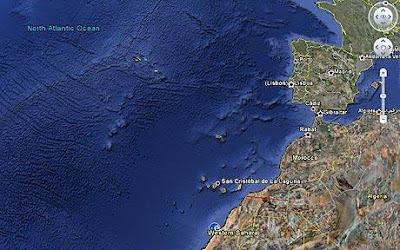
Sample the latest from Google in terms of discovery of Atlantis.


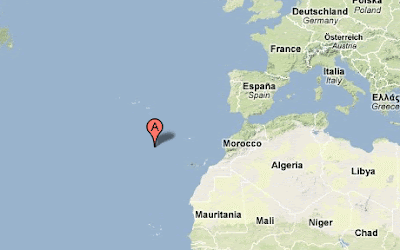
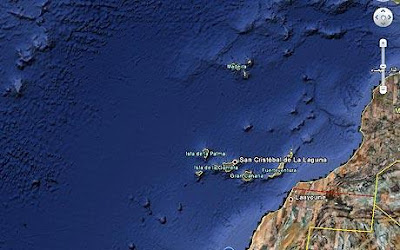
Keen Observers had spotted what appeared to be the remains of a vast city under the sea, the size of wales on the floor of Atlantic Ocean. Thus the Atlantic Ocean was spotted on Google Earth! It was only explained later that the lines were the artifact of Google's map making process! These were the paths made by the boats using SONAR to record the sea floor terrain data. Atlantis or no Atlantis, Google was the news maker! Another very impressive application of Google Earth was the toad crossings mapped by Google Earth to avoid the number of toads killed by Motorists in accidents! Thats something that PETA would be in for... Amongst others Google Earth in reality has helped locate pristine forests in Mozambique, a house of a previously unknown species and ancient roman villas.


All said and all done, such discoveries, outages apart from its technology and innovation keep up the prominence of Google amongst people and populations... It keeps the buzz going outside of the internet space as well.

Monday, March 9, 2009

Indian Telecom Story (Part VII):Reduction in Mobile termination charges

I had discussed the Mobile Termination charges in an earlier blog http://technologyandtelecom.blogspot.com/2009/02/indian-telecom-story-part-iii-entry.html and this was a month back (9th February 2009). TRAI has finally taken the mid road to the question of Mobile termination charges. Mobile termination charges are basically the per minute charge paid by an operator to another, if a call of the first operator is terminated on the second's network. To that effect, any operator with a national coverage has lesser probability of paying this termination charge because chances are that the call will be terminated on its network owing to its ubiquitous presence. Thus the incumbents could use this as a pricing barrier against newer entrants. The chief beneficiaries of the MTC regime are the 100% footprint operator such as Airtel, Reliance, Vodafone etc. Lobbying for the case of MTC as a means to generate returns to serve their rural expansion, it can be debated that the Lobby had tried to impress TRAi and DoT hard on this subject. On the other hand the new players to the party have clamored that a MTC regime would make it difficult for them to establish a reasonable presence because of the price disparities.

As of today TRAI has slashed the MTC charges from 30 paise per minute to 20 paise per minute there by taking the mid road between these two views. The effects of this:
1. Likely reduction in Revenues for the incumbents
2. A more uniform battle ground for new entrants
3. Lowering of the telephone tarriffs for consumers on roaming
4. ARPUs further reducing on account of roaming charges.

Thus to an open market, reduced prices, commoditized products and more competition, here it is: Jaye Ho!

Friday, March 6, 2009

Apple: Software Services as Differentiator

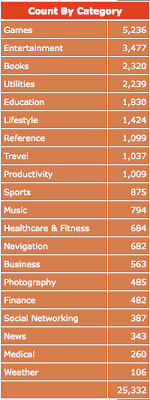
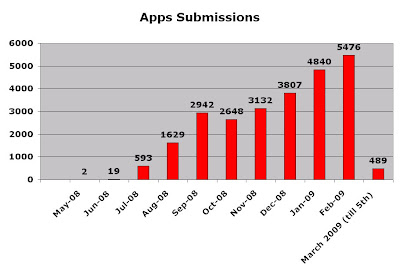
Customer loyalty is a thing of the past, or so it is believed. Not with Apple though! RIM, Nokia, Microsoft and Pre are busy in their preparations to launch their own options of App. Stores, and it might seem that this will take the wind out of Apple's Apps Store sails. Au contraire, quite the reverse seems to be the case as Apple seems to be accelerating both in terms of number of applications on their stores and the downloads. On March 5th, 2009 Apple registered its 25000th application in its iPhone store. Before this, sometime in mid January, Apple had passed the 500 million mark in downloaded applications! For full report click here!


The 25000 apps and 500 million downloads on 23 million devices act as a part of a software strategy, which creates a distinct stickiness for the iPhone and enhances customer loyalty over the long term. It is believed that the Apps personalize the iPhone to levels that competitors cannot match and consumers cannot do without. This creates a huge stickiness between the consumer and the product. A device tailored by him according to his requirements in the one thing that he needs the most and at present Apple does seem to have both the device and software wherewithall to give suffice his need.

While Apps range from free to $999, it is but obvious that the ones in the lower price brackets < $2.99 consitute 80% of the apps and probably will also feature as much in the downloads!

Thursday, March 5, 2009

Profiling Facebook: The Google of Social Networking (Part II)

In the earlier part of this post (part I), i had written about the Facebook phenomenon and its about its popularity and its business model. It is doing to social networking what Google did to the evolution of internet and search as a whole. Little wonder that it is the largest social networking site and in top 10 websites of the world. http://technologyandtelecom.blogspot.com/2009/02/profiling-facebook-google-of-social.html


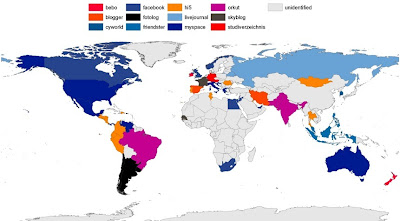
While this schematic is a little old (June 2007) it gives a pretty clear picture of the dominance of social networking websites in the world. The Dark Blue (Facebook) features prominently in Canada, Australia, South Africa, Egypt, UK, Scandinavia, South Korea, Italy and parts of Eurasia. Since then the spread of the Blue would have increased by a factor of 3.5 and would porominently feature the whole North American continent. Facebook's march to 200 million users earnestly began in January 2008, when it made translation tools available to the international user. Today more than 70% Facebook users are outside USA and most of them read it in their native language.

In 2005, Mark Zuckerberg had outlined his vision for Facebook to be an online "social utility" tool which would mean a global digital phone book which users would use to locate people on the web. In strictest terms the vision has not changed very hugely except that instead of Phone book (assisting medium), facebook intends to usurp the position of the phone itself. He dreams of Facbook to be the central portal for communication, work and pleasure. It also becomes the central place where users organize parties, store pictures, find jobs, watch videos and play games. eventually , Facebook will become an online passkey to gain access to websites and online forums that require personal identification. In other words, Facebook will be the place where people will live their digital lives in the internet of the future.
Zuckergerg vision has found teh traction and has a 175 million "friends" following. However the question of monetization of traffic is something that most of the Web 2.0 evangelists are wrangling with. We will analyse the business macros of Facebook in the next part of the series in some time.

Wednesday, March 4, 2009

The Ascendance of Apple


This has been Apple's decade. From behind and nowhere, this Cupertino, California based hi tech company has disruptive technologies and trends and worked its own path upwards. In the process, it has emerged as America's no.1 most admired company, sales have tripled over the last 5 years and it ranks no.1 amongst Fortune 500 companies for total return to share holders over the past 5 years (94%) and past 10 years (51%). The latest feather in Apple's cap is a successive listing (2008 and 2009) in America's most admired company list and World No 1 in most admired companies list. This 32 year old company had an unprecendented run since 1997 disrupting conventional wisdom on product lines and groundbreaking new products. Led fully from the front by Steve Jobs, Apple has out thought, out innovated and out played markets and competitors alike.

Timelines, Products and Discontinuities
As stated earlier Apple has launched waves of discontinuity in industries turning tables on the existing rules of the game:
1. Pixar, which Steve Jobs bought from George Lucas in 1986, out innovated the Hollywood mainstream into full length computer animated movie making with its Toy Story in 1995. It redid its success in 1998 Bug's Life, 2001 Monsters Inc, 2003 Finding Nemo, 2004 Incredibles. 2006 Cars. Pixar is sold to Disney in 2006 making Steve Jobs Billions.
2. In 1998, Apple upturned the desk top with its colourful IMac, which became the fastest selling Macintosh ever!
3. In 2001, which is arguably Apple's biggest year till date, it released the iPod, iTunes and OS X operating system. 8 years later, 50% of Apple's revenue come from iPods and iTunes store is the second largest music retailer in the US with 6 billion downloads. It spawns a plethora of attempts by Telecom industry players, notably Nokia and Microsoft to build a Music store, on a somewhat different business model.
4. iPod Nano is released in 2005 and is a huge hit. iPod becomes to music players what Kleenex is to tissue or Xerox is to copiers.
5. iPhone is introduced in 2007. Gets the status of Jesus phone and in one sweep upturns the existing game inthe mobile device industry. Spawns a record number of copy cats.
6. 2008: MacBook Air released, a ultra thin 13 inch wide sleek metal laptop. Apple again triumphs
7. 2008: A faster cheaper and more powerful iPhone 3G debuts and outsells the original by a mile.

Apple has demonstrated how to create real, breathtaking growth by dreaming up products so new and ingenious that they have upended one industry after another: consumer electronics, the record industry, the movie industry, video and music production.Apple's approach is to put every resource it has behind just a few products and make them exceedingly well. Apple is brutal about culling past hits: The company dropped its most popular iPod, the Mini, on the day it introduced the Nano (a better product, higher margins --> why dilute your resources?).
The culture of Innovation and the leadership of Steve Jobs has gotten Apple so far. As all and ever, everyone waits for Apple's next innovation, its next endeavour to change history.